

Most US Custom Stamps Cost $10–$40, Invitationbox Picks to Save
Most custom stamps in the United States cost between $10 and $40, with reliable self-inking models starting around $20. The size of the mark you need is the single biggest factor in that price. Measure the exact area your stamp needs to cover before you shop. That one step will tell you more about your final price than anything else on this page.
TL;DR:
- The cost of custom stamps largely depends on size, with small self-inking stamps typically costing $15 to $40, and larger or specialty stamps exceeding $50.
- Choosing standard sizes and supplying vector artwork can help reduce setup fees and overall expenses, especially for frequent or high-volume orders.
- Orders take one to five business days for production, with rush options available at an additional cost, and shipping fees vary based on order size and speed.
- Buying in bulk can lower per-unit costs, with discounts often applied when ordering five or more stamps simultaneously.
- The most cost-effective choice depends on usage frequency; high-use office stamps benefit from re-inkable models, while infrequent users can opt for lower-end options.
Table of Contents
- How Much Do Custom Stamps Cost by Type?
- What Actually Drives Custom Stamp Pricing?
- What Will a Custom Stamp Actually Cost Me?
- How Can I Lower My Custom Stamp Cost?
- How Long Does a Custom Stamp Take to Ship?
- Why Price Alone Shouldn’t Decide Your Stamp Purchase
- Find Your Match Among Invitationbox’s Custom Stampers
- Sources
How Much Do Custom Stamps Cost by Type?
Your final price depends almost entirely on which stamp style you choose, and each type has its own natural price ceiling.
- Self-inking stamps: $15 to $40 for standard sizes, climbing toward $60 for larger models with bigger ink pads.
- Traditional wood-handle stamps: Often $10 to $25, since they skip the built-in ink mechanism that drives up self-inking prices.
- Pre-inked stamps: $20 to $50, reflecting crisper impressions and longer service life between re-inking.
- Embossers: $25 to $60, priced higher because they use a metal die and a hand-press mechanism instead of ink at all.
- Large or specialty stamps: $50 and up, sometimes reaching well past $100 for oversized or industrial-grade pieces.
Wood-handle stamps sit at the budget end because their construction is simple. A block of wood, a rubber die, and a handle cost little to produce. Self-inking and pre-inked stamps cost more because they house a spring mechanism or an internal ink reservoir. Embossers and oversized stamps land at the top because they need more material, more engraving time, and often a heavier frame. Whichever category you land in, treat these ranges as a starting point. Your exact quote will move up or down based on the details in the next section.
What Actually Drives Custom Stamp Pricing?
Size is the dominant variable. Vendors design around a handful of standard ink pad footprints, and moving up even one size bracket creates a discrete price jump rather than a gradual increase. A 5/8 inch stamp and a 2 inch stamp are not on the same pricing curve.
The mechanism matters too. A self-inking stamp costs more to build than a hand stamp because it packs a spring-loaded ink pad into a plastic housing. Pre-inked stamps use a porous die that holds ink internally, which raises material cost but extends the life of each impression.
Artwork prep adds a separate layer. Vendors that receive clean vector files typically skip extra setup fees, while a blurry logo or a hand-drawn sketch often triggers a redraw charge. Impression rating factors in as well: some professional-grade stamps are rated for up to 50,000 impressions before the pad needs replacing, and re-inkable models cost less over time even when the sticker price looks higher. Specialty inks for surfaces like plastic or metal add a modest premium on top of all of it.
What Will a Custom Stamp Actually Cost Me?
Real numbers help more than ranges, so here is how three common purchases typically shake out.
Scenario 1: A small return-address stamp. A basic self-inking address stamp with a footprint around 3/4 inch by 2 inches usually lands between $18 and $28. It is one of the most standardized products in the category, which keeps the price predictable and close to the entry-level end of what Office Depot and similar retailers list for smaller self-inking stamps.
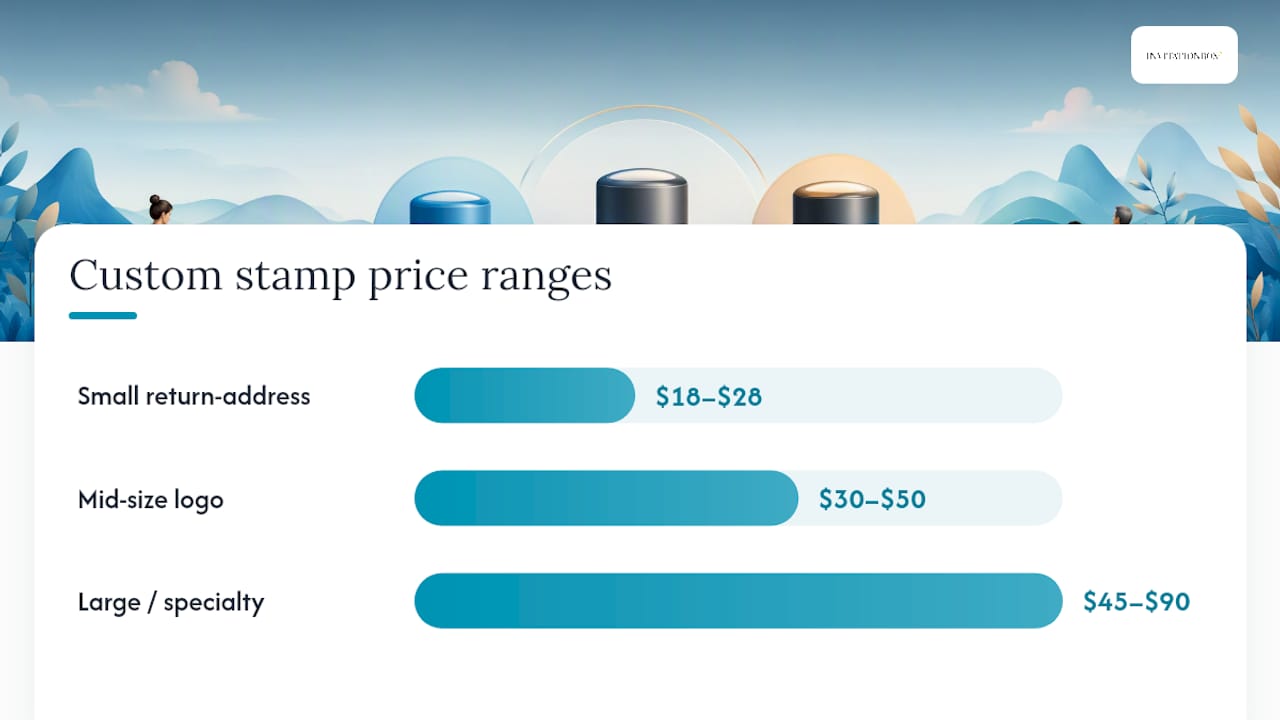
Scenario 2: A mid-size logo stamp for packaging. Small businesses stamping boxes or thank-you cards often need a 2 inch by 2 inch or larger die to fit a logo clearly. That size bump pushes the price to $30 to $50, and a bold, high-detail logo can nudge it higher if the vendor needs extra engraving time.
Scenario 3: A large wood-handle or specialty-surface stamp. Oversized wood stamps used for craft projects, or professional stamps built for plastic, metal, or fabric, often run $45 to $90. The jump comes from [bigger ink pads and steel-frame construction](https ://www.selfinkingstamps.co.nz/how-much-does-a-custom-rubber-stamp-cost/) rather than the artwork itself.
Buying in bulk changes the math fast. A single self-inking stamp at $25 might drop to $20 or less per unit when ordered in a batch of five to ten, since the setup and engraving cost gets spread across more pieces. If your office needs matching stamps for several employees, ask for a quantity quote before you order one at a time.
How Can I Lower My Custom Stamp Cost?
A few small decisions before you check out can shave real dollars off your total without pushing you toward a lower-quality product.
- Measure your marking area first. Knowing you need 1 inch instead of assuming 2 inches can drop you into a cheaper size bracket immediately.
- Stick to standard sizes and re-inkable self-inking models. Custom dimensions and single-use pads both cost more over the life of the stamp.
- Supply vector artwork. Clean files avoid the setup and revision fees that come with rough logos or scanned signatures.
- Watch shipping thresholds and order timing. Many vendors waive shipping past a minimum order size, and ordering outside rush season avoids expedite fees.
- Spend more only when volume or surface demands it. High-use office stamps and specialty-surface inks are worth the premium; a stamp you use twice a year is not.
Pro Tip: Measure your logo or signature at the actual size you plan to stamp it, not the size it appears on your screen. A design that looks clean at 4 inches on a monitor can lose detail once it is engraved into a 1 inch die.
How Long Does a Custom Stamp Take to Ship?
Most custom stamp orders take one to five business days to produce before they even ship, and rush production for next-day turnaround usually carries an added fee. Standard shipping adds a few more days on top of that window, though many vendors offer free shipping once your order crosses a set dollar threshold, which matters more for small single-stamp orders than for bulk purchases where shipping cost per unit is already low.
Made-in-USA production, when a vendor offers it, sometimes extends lead time slightly compared with mass-produced imports, but it often carries a perceived quality edge that buyers factor into their decision alongside price.
Why Price Alone Shouldn’t Decide Your Stamp Purchase
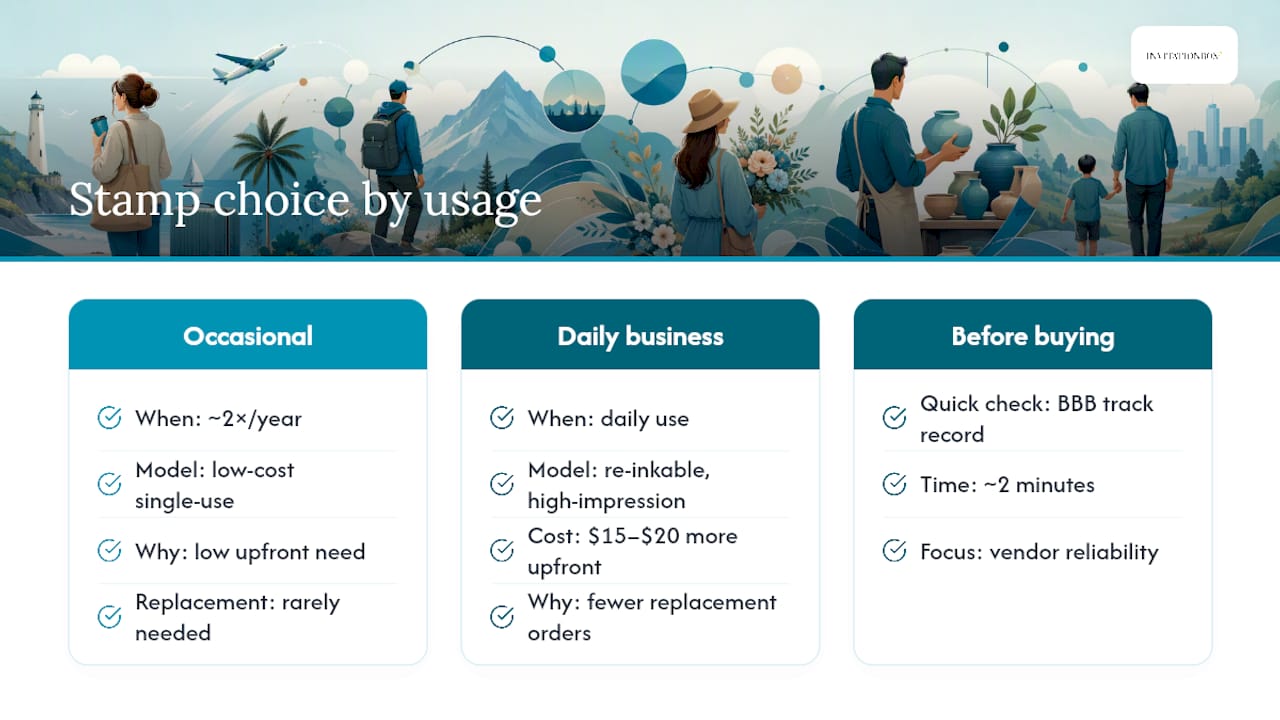
The cheapest stamp on the page is rarely the smartest buy if you are stamping fifty envelopes a week. Invitationbox has spent more than 19 years building personalized stationery around exactly this problem: matching the right stamp mechanism to the right amount of use, not just the lowest sticker price.
A stamp you pull out twice a year for holiday cards can absolutely live at the low end of the range. A stamp your small business uses daily on packaging or invoices deserves a re-inkable, higher-impression model, even if it costs $15 or $20 more upfront. That gap pays for itself in fewer replacement orders. Before buying from any vendor, a quick BBB check on their track record is worth the two minutes it takes.
— Jon
Find Your Match Among Invitationbox’s Custom Stampers
Some retailers offer popular themed stampers built for specific kinds of buyers instead of one-size-fits-all dies.
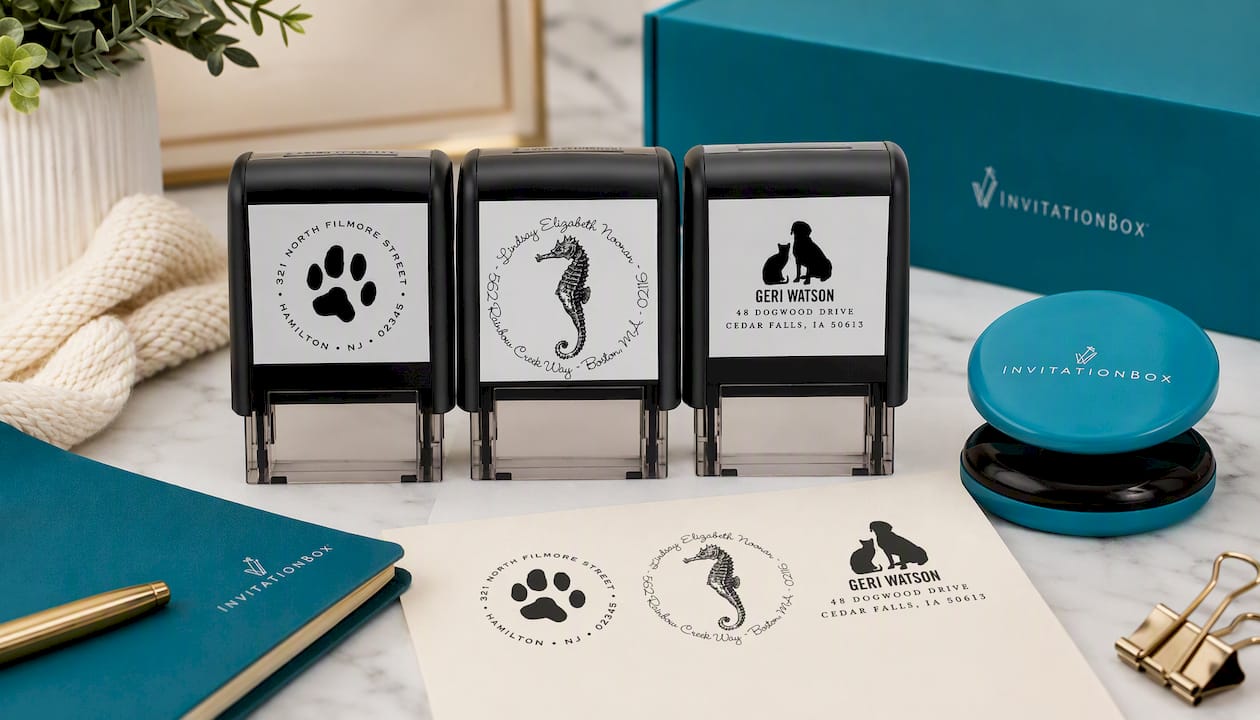
The Paw Print Stamper or Embosser suits gift-givers and pet owners looking for a personal touch on cards or party favors. The Vintage Seahorse Stamper or Embosser fits anyone building elegant, coastal-themed stationery for weddings or correspondence. The Dog and Cat Stamper or Embosser works well for pet-themed gifts, rescue fundraisers, or personal notecards with a lighter, playful feel.
Before you check out on any of these, run through a quick checklist: measure your footprint against the product listing, pick an ink color that matches your paper stock, request a digital proof if your design includes text, and choose a shipping speed based on when you actually need the stamp in hand. If you are still comparing mechanisms, the self-inking stampers comparison guide walks through the trade-offs in plain terms, and small businesses branding apparel alongside their stationery might also look at custom DTF transfers for a matching look across products.