

Choosing the Right Invitation Paper for Your Wedding
For a modern wedding, choose heavy smooth matte or eggshell. For formal or black-tie, go with cotton or linen. For a romantic, evening-lit celebration, pearl or shimmer adds the glow you want, and for rustic or eco-conscious weddings, kraft or recycled stock feels right at home. Most invitation suites use cover stock weight that feels substantial without tipping your postage into a second stamp.
Before you commit to any of it, though, a few small moves save you from an expensive redo:
- Order physical samples of your top two or three finishes before you print anything.
- Test one full invitation proof on your actual chosen stock, not just a swatch.
- Weigh a finished, assembled invitation (card, envelope, inserts) to confirm postage.
Key Takeaways
The right invitation paper matches your wedding’s formality, works with your chosen print method, and gets tested as a physical sample before you order in bulk.
| Point | Details |
|---|---|
| Match style to paper family | Modern pairs with matte, formal with cotton or linen, rustic with kraft, evening with pearl. |
| Know your weight range | Most invitations use 80 to 120 lb cover stock (220 to 350 gsm) for a substantial feel. |
| Confirm print compatibility | Letterpress needs cotton or rag; home printers handle matte and linen most reliably. |
| Prioritize archival stock for keepsakes | Acid-free, lignin-free paper resists yellowing far longer than standard wood-pulp stock. |
| Order samples through Invitationbox | Request linen or matte samples and a custom proof before committing to a full print run. |
Table of Contents
- What Invitation Paper Types Actually Mean: Weight, Finish, and Texture
- Common Invitation Paper Types and When to Use Each
- How to Choose the Best Paper for Your Invitations
- Matching Print Methods to Paper Types
- Why Archival Paper Matters for Keepsake Invitations
- A Stationery Professional’s View on Choosing Paper
- Let InvitationBox Help You Find the Right Paper
- Frequently Asked Questions
- Sources
What Invitation Paper Types Actually Mean: Weight, Finish, and Texture
Every invitation paper description throws around three separate ideas: weight, finish, and texture. Confusing them is the single most common reason couples order the wrong stock.
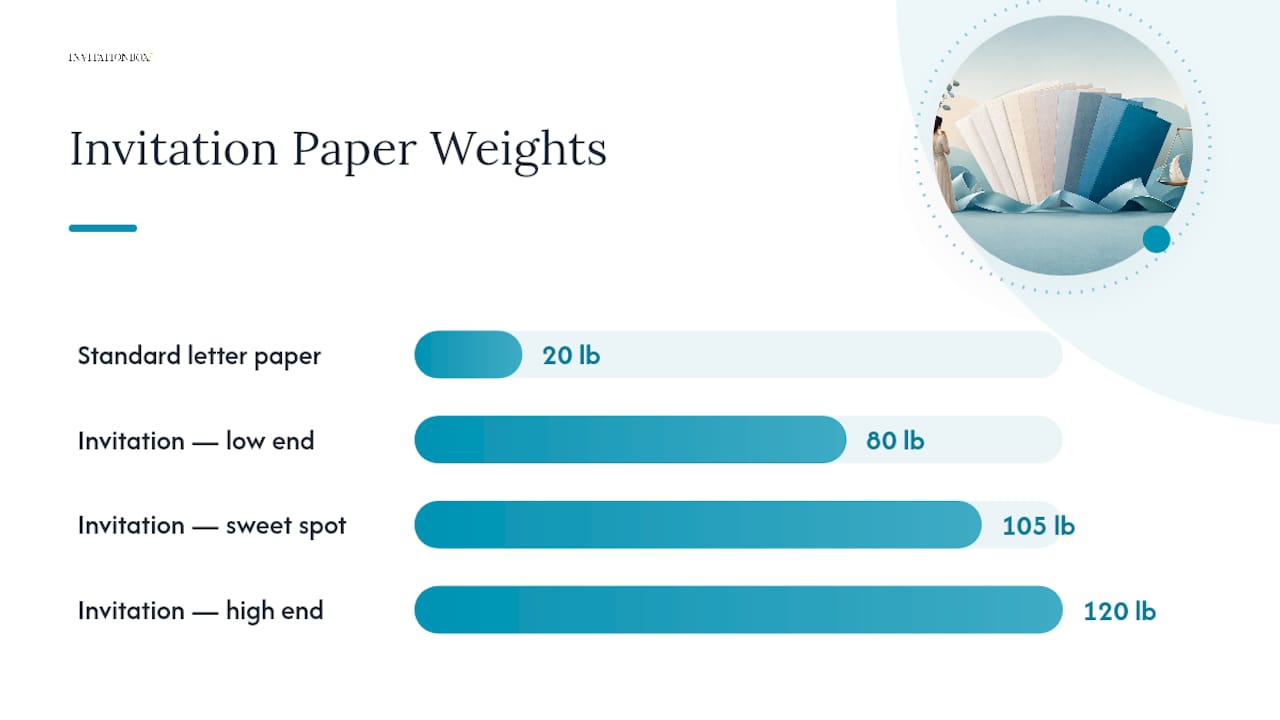
Weight is how thick and substantial the paper feels, measured in pounds (lb) for US cardstock or grams per square meter (gsm) internationally. A standard printer sheet runs around 20 lb (75 gsm). Wedding invitations typically use 80 to 120 lb cover stock (220 to 350 gsm), with 100 lb to 110 lb being the sweet spot for a card that feels substantial in the hand but doesn’t blow your postage budget.
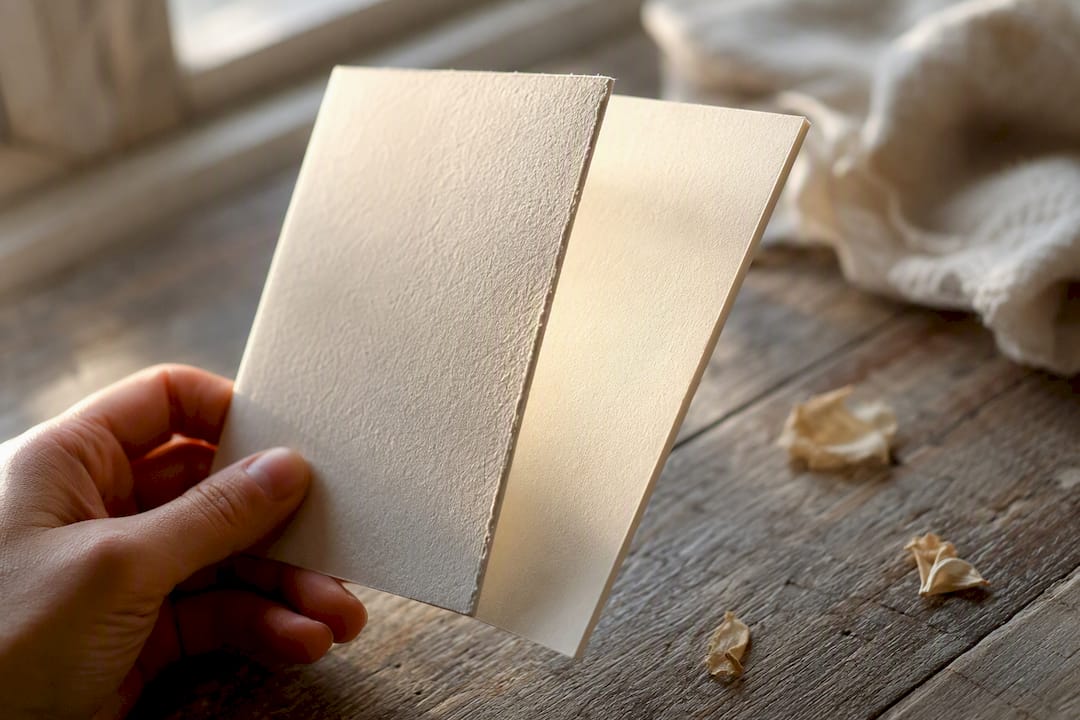
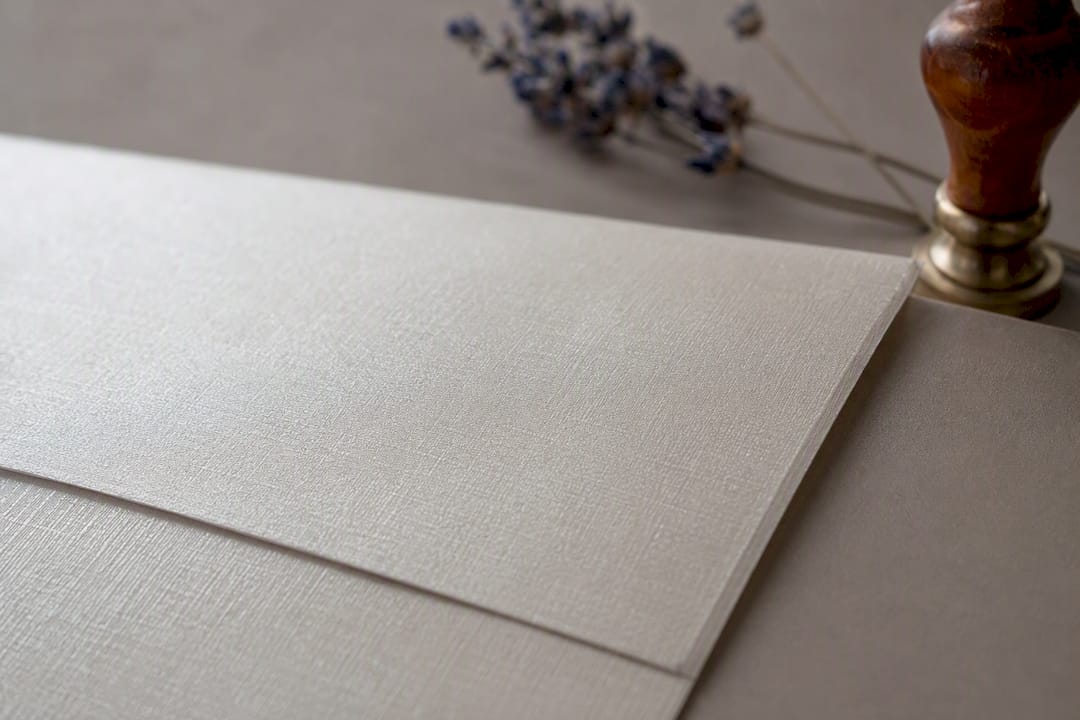
Finish describes the surface coating or lack of one: matte, eggshell, or glossy. Texture describes the physical surface pattern you can feel: linen’s woven cross-hatch, felt’s soft toothy grain, or cotton’s slightly irregular, deckled quality. A paper can be matte and textured at the same time, which is exactly what confuses most first-time buyers reading product pages.
| Paper Attribute | Typical Range | What It Affects |
|---|---|---|
| Weight (cover stock) | 80–120 lb / 220–350 gsm | Feel, rigidity, postage cost |
| Standard letter paper | ~20 lb / 75 gsm | Baseline comparison only |
| Linen premium vs. cotton | 30–50% higher cost | Budget planning |
| Common envelope liner weight | 80–120 lb / 220–350 gsm | Coordinated suite thickness |
Archival terms matter more than most couples expect. Acid-free and lignin-free stocks resist the yellowing and brittleness that plague cheap wood-pulp paper within a few years. Acid-free and lignin-free construction is the most significant factor in preserving stationery long-term, which matters enormously if your invitation is headed for a scrapbook or frame rather than the recycling bin. Cotton content (sometimes called rag content) pushes this even further, since cotton fiber contains far less of the acidic lignin that causes deterioration in standard wood-pulp paper.
Pro Tip: When you request samples, ask for the same design proofed on every stock you’re considering, printed with the exact method your final order will use. A digital proof mockup on your screen tells you almost nothing about how linen texture will catch ink or how pearl shimmer shifts color under lamplight.
Common Invitation Paper Types and When to Use Each
Here’s a type-by-type breakdown of what you’ll actually encounter while shopping.
- Smooth matte or coated cardstock. Crisp, non-reflective, and the safest choice for text-heavy invitations or photo-forward designs. Matte resists fingerprints and keeps small type sharp, which makes it the default for modern, minimalist, and photo-forward weddings. It works with home inkjet, laser, and digital press printing. Typical weight: 100 to 110 lb cover.
- Eggshell. A gently pebbled, low-sheen surface that splits the difference between matte and linen. Suits classic and garden-style weddings. Compatible with most digital press and home printers. Typical weight: 100 to 120 lb.
- Linen. A woven, fabric-like texture applied through embossing after the paper is manufactured. It performs well in most laser and inkjet printers and comes in a wide range of weights and colors, and it suits formal and black-tie weddings. Expect to pay 30 to 50 percent more than comparable cotton-rag stock. This is worth knowing before you fall for a sample.
- Cotton or rag stock. Soft, substantial, slightly irregular at the deckled edge. The traditional choice for formal weddings and the top pick when you’re planning letterpress or engraving, since cotton fibers tolerate deep impressions without cracking. Typical weight: 110 to 130 lb.
- Felt. A soft, toothy texture similar to cotton but with a slightly fuzzier hand feel. Good for rustic or vintage-inspired suites. Best on digital press; can be inconsistent on home printers.
- Vellum. Translucent, smooth, and used almost exclusively as an overlay or wrap rather than the primary card. Popular for layered, romantic invitation suites. Prints best with laser toner, since inkjet ink can smear on the slick surface.
- Kraft or recycled stock. Warm, brown-toned, visibly fibrous. The natural fit for rustic and eco-conscious weddings. Works with most print methods, though very light ink colors can lose contrast against the tan background.
- Pearl or shimmer. A metallic sheen that reflects light and adds drama to evening events. Pearl finishes can shift how ink colors read under different lighting, so proof it under the lighting your reception will actually use.
- Parchment. A mottled, vintage-look finish, often slightly translucent. Suits historical or old-world wedding themes but can reduce print contrast for fine detail.
One pitfall worth flagging twice: textured stocks like linen and felt can soften very fine type or delicate line art, so if your design leans on thin script fonts, lean toward smooth matte or eggshell instead. And remember that pearl and shimmer papers don’t just look different. They can genuinely change how a printed color reads once light hits the surface.
How to Choose the Best Paper for Your Invitations
Work through this checklist in order, and you’ll avoid the two most expensive mistakes: choosing a stock that fights your design, and choosing one that fights your printer; for expert advice on coordinating your vendors and timeline, consider why to choose turnkey wedding solutions for your big day.
- Match paper to your wedding style first. Modern and photo-forward suites lean matte or eggshell; formal and black-tie lean cotton or linen; rustic and outdoor lean kraft; romantic evening events lean pearl or shimmer.
- Confirm print-method compatibility second. A gorgeous cotton stock is wasted if your printer can’t lay ink evenly on its texture.
- Order three samples and one full proof before finalizing. A proof catches problems a swatch never will, from color shift to bleed-through.
Beyond the sequence itself, weigh these factors before you place a full order:
- Design complexity (fine script and small type favor smooth stock over heavy texture).
- Print method you or your printer will actually use.
- Envelope thickness and total postage weight once everything is assembled.
- Total budget, since linen and cotton both carry real premiums over smooth matte.
- Whether you’ve actually held a physical sample rather than judged a product photo.
When you’re comparing vendors or your own printer’s stock list, ask directly: is this paper acid-free? What’s the actual weight in lb and gsm? Can you proof my exact design on this stock before I commit to the full run? What will the finished, assembled invitation weigh at the post office?
Matching Print Methods to Paper Types
Your printer or print method narrows your paper choices more than most couples realize. Home inkjet and laser printers handle smooth matte, eggshell, and linen comfortably, but tend to struggle with very heavy cotton stock (jamming) or high-shine pearl (smudging). Digital press and offset printing (the method most professional stationers and platforms like InvitationBox use for custom orders) handle nearly every finish, including vellum and kraft, with consistent results.
Letterpress and engraving are pickier. Both processes press a plate into the paper, so they need cotton, rag, or another dense, soft-texture stock that can hold the impression without cracking or tearing. Thin, brittle papers simply won’t survive the pressure. Foil stamping and thermography similarly need a stable, dense stock. Loose-fibered or highly textured papers can cause uneven foil adhesion.
- Home inkjet/laser: matte, eggshell, kraft, most linens.
- Digital press: nearly everything, including vellum and pearl.
- Letterpress/engraving: cotton, rag, dense felt.
- Foil stamping/thermography: dense, stable stocks; avoid loose-fiber textures.
Why Archival Paper Matters for Keepsake Invitations
If your invitation is going into a scrapbook, a frame, or a memory box, the paper’s chemistry matters as much as its color. Acid-free and lignin-free stock resists the yellowing and brittleness that appears in ordinary wood-pulp paper within just a few years, which is why archival-grade paper is considered the single most important factor in stationery longevity. Higher cotton content compounds that protection since cotton fiber carries less of the acid that triggers deterioration in the first place.
Pro Tip: Store keepsake invitations flat in an acid-free archival box, away from direct sunlight and humidity, with acid-free tissue between layers if you’re saving several pieces of a suite. Basements and attics both fail the “cool, dry” test.
A Stationery Professional’s View on Choosing Paper
After years steeped in wedding stationery, my honest bias runs toward cotton for formal suites and smooth matte for nearly everything else. Cotton simply photographs and feels better than any budget alternative, and matte never fights a design. If you order one sample first, make it a matte proof of your actual invitation text. It reveals more about legibility than any swatch card ever will.
Let InvitationBox Help You Find the Right Paper
Choosing between a dozen finishes gets easier once you’re holding real stock instead of guessing from a screen. Invitationbox stocks linen, matte, and specialty finishes across its personalized stationery line, and every custom order includes a proof so you see your actual design on your chosen paper before printing begins. If you like the woven texture of linen, the Rose Linen Green Thank You Cards and Rose Linen Pink Thank You Cards show how color prints on that texture, and the Paper Lanterns Mushroom Thank You Cards demonstrate a softer, muted palette on the same finish family.
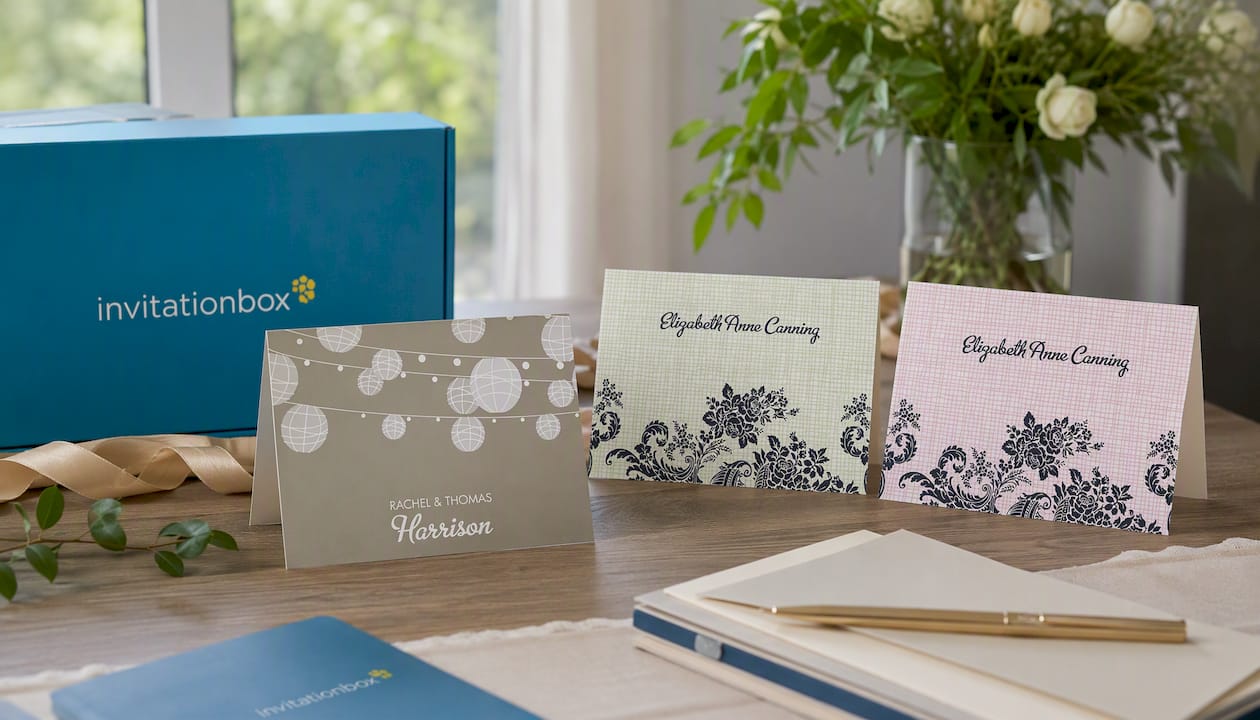
Custom proofing means you’re not committing blind. Order a sample set in the finishes you’re weighing, request a proof on your top choice, and confirm the weight and color before your full run goes to print.
Frequently Asked Questions
What is the best paper weight for wedding invitations? Most wedding invitations use 80 to 120 lb cover stock (220 to 350 gsm). Landing around 100 to 110 lb gives you a substantial feel without pushing your envelope into extra postage.
What’s the difference between matte and linen paper? Matte is a smooth, non-reflective finish that keeps fine type sharp. Linen is a woven texture applied through embossing that adds a fabric-like feel but can soften very small text and typically costs more.
Is cotton or linen paper better for invitations? Neither is universally better. Cotton suits letterpress and engraving because it tolerates deep impressions, while linen offers a similar textured look at a lower cost for digital or offset printing.
Can I print invitations on linen or cotton paper at home? Linen generally performs well in home inkjet and laser printers. Heavier cotton stock can jam some home printers, so check your printer’s maximum sheet weight before ordering in bulk.
Why does acid-free paper matter for invitations? Acid-free and lignin-free paper resists the yellowing and brittleness that affects standard wood-pulp stock within a few years, which matters if your invitation is destined for a frame or keepsake box.
Should I order paper samples before printing my full order? Yes. A physical sample under natural light, held with your actual envelope, shows texture, color, and print contrast that a screen or product photo cannot.
Sources
- Paper 101: The Different Types of Paper Finishes - WCP Solutions
- Acid-free tissue paper for archival storage - Pressbooks (CUNY)
- Wedding Invitation Paper Finishes: How To Choose Matte, Linen, Cotton, And Shimmer - Dutable
- Business Paper, 25% Cotton White, 24 lb. (P554CK) - Southworth
Recommended
- Why Choose Custom Embossers for Your Wedding Invitations? – InvitationBox.com
- 8 Tips for Choosing the Perfect Engagement Party Invitations – InvitationBox.com
- How Do I Choose the Right Wedding Invitations for My Big Day? – InvitationBox.com
- How to Choose the Perfect Engagement Party Invitations – InvitationBox.com