

RSVP Card vs Online RSVP: Which Should You Choose?
For most modern U.S. weddings, a hybrid approach works best: go digital for speed and tracking, and add paper RSVP cards when formality or an older guest list calls for it.
- Choose online RSVPs when you want instant headcount updates, lower costs, and easy meal or plus-one management.
- Choose mailed RSVP cards when your event is formal, your guest list skews older, or you want a keepsake from your celebration.
- Use both when your guest list mixes generations or your invitation suite demands a polished, traditional look alongside modern tracking.
Table of Contents
- What is a mailed RSVP card versus an online RSVP?
- Pros and cons of online RSVPs for weddings
- Pros and cons of traditional mailed RSVP cards
- At-a-glance comparison of online RSVPs vs mailed RSVP cards
- When and how to use a hybrid RSVP approach
- Practical timeline and tracking for managing your guest list
- Why paper RSVP cards still matter: an Invitationbox perspective on stationery and design
- Key Takeaways
- The case for letting your guest list decide
- Invitationbox makes your paper RSVP suite easy to produce
What is a mailed RSVP card versus an online RSVP?
A mailed RSVP card is a small enclosure card tucked into your invitation envelope alongside a pre-addressed, stamped return envelope. Guests fill it out by hand and mail it back. A typical card includes:
- A reply-by date
- An attendance line (“Joyfully accepts” / “Regretfully declines”)
- Meal choice options (if applicable)
- A line for guest names and, sometimes, a plus-one field
An online RSVP is a digital form hosted on a wedding website or sent via a QR code printed on a details card. Guests click a link or scan the code, fill out the form, and submit. Common fields include attendance, meal preference, dietary restrictions, plus-one name, and song requests.
In practice, a mailed suite might include a small enclosure card reading: “Kindly reply by October 1.” An online suite might place a QR code on a details card with the note: “RSVP at [yourweddingsite.com] by October 1.” Both accomplish the same goal. The difference is in the experience, the cost, and the logistics.
Pros and cons of online RSVPs for weddings
Online RSVPs have become the default for many couples, and the reasons are practical. Digital RSVPs speed replies, centralize tracking, and are particularly helpful for destination weddings and multi-event planning where quick headcount updates matter.
Benefits of going digital:
- Replies arrive faster, often soon after the invitation is sent
- Guest data feeds directly into a spreadsheet or dashboard, no manual transcription needed
- Meal choices, dietary restrictions, and plus-one names are captured cleanly in one place
- No printing or postage costs for reply cards or return envelopes
- Responses cannot get lost in the mail
- Fewer paper cards means a smaller environmental footprint
Common downsides to consider:
- A purely digital RSVP can feel less formal, which may not suit a black-tie event
- Some guests, particularly older relatives, may not be comfortable with online forms
- Wedding website platforms collect guest data; review the privacy policy of any platform you use before sharing your full guest list
Pro Tip: Use form logic to lock your online RSVP to named invitees only. This prevents uninvited plus-ones from adding themselves. Also, list a phone number on your details card as a fallback for guests who prefer not to go online, and log those calls into your master list the same day you receive them.
When evaluating digital RSVP platforms, look for features like a custom guest list upload, a hard deadline that closes the form automatically, and a CSV export you can hand directly to your caterer.

Pros and cons of traditional mailed RSVP cards
Paper RSVP cards carry a warmth and formality that no digital form quite replicates. A beautifully printed card, tucked into a matching envelope with a handwritten guest name, signals that this event matters. Going digital cuts stationery and postage costs and reduces manual transcription, while paper invites add keepsake value but create administrative overhead for tracking.
Benefits of mailed RSVP cards:
- Signals formality and care, especially for black-tie or traditional ceremonies
- Accessible to every guest regardless of tech comfort
- Handwritten replies become a sentimental keepsake many couples treasure
- Matches a cohesive, formal invitation suite beautifully
Downsides to plan for:
- Printing and postage for both outgoing and return envelopes can be costly
- Replies may come in gradually over a period, delaying final headcount planning
- Replies require manual entry into a tracking system
- Cards can sometimes be lost or delayed during mailing, necessitating follow-up
Budget note: Factor in the cost of the RSVP cards themselves, pre-addressed return envelopes, and two rounds of postage (one to mail the suite, one for the return envelope). If your suite is heavier than one ounce, you may need a non-machinable surcharge stamp, so weigh a fully assembled envelope at the post office before you order postage in bulk.
Pro Tip: Pre-address and pre-stamp your return envelopes before they go out. Guests who have to find a stamp are far less likely to mail the card back promptly. A small friction point like that can cost you weeks of follow-up.
At-a-glance comparison of online RSVPs vs mailed RSVP cards
The choice is not always binary; many couples use hybrid approaches to balance aesthetics and efficiency. The table below maps the key decision dimensions so you can see at a glance where each method wins.
| Dimension | Online RSVP | Mailed RSVP Card |
|---|---|---|
| Speed of replies | Days | 1–3 weeks |
| Cost | Low to none (platform may be free) | Moderate (printing + two rounds of postage) |
| Tracking ease | Automatic dashboard or CSV export | Manual transcription required |
| Formality | Casual to semi-formal | Semi-formal to black-tie |
| Accessibility | Requires internet/device | Works for all guests |
| Reliability | User error possible | Cards can be lost in mail |
| Keepsake value | None | Handwritten replies are sentimental |
Quick recommendations by wedding type:
- Destination wedding: — Digital RSVP, so guests can confirm travel logistics quickly
When and how to use a hybrid RSVP approach
Some planning specialists recommend skipping a separate reply card and instead placing a short instruction or QR code on a details card to preserve suite aesthetics while directing guests online. That is the hybrid model in a nutshell: the suite looks polished and traditional, but the tracking happens digitally.
When a hybrid approach makes the most sense:
- Your guest list spans multiple generations and some relatives are not online
- You love the look of a formal paper suite but want the efficiency of digital tracking
- You are planning a destination wedding with some guests who will not receive email invitations
How to implement it cleanly:
- Choose one digital platform as your single source of truth for all RSVPs.
- Include a small details card in your paper suite with a short URL and a QR code pointing to your RSVP form.
- Add a phone number on the same card for guests who prefer to call.
- Log every phone or mailed reply into your digital system the same day you receive it.
- Set one RSVP deadline across all channels and enforce it consistently.
Sample details card wording that preserves formality:
“Kindly reply by October 1, 2026. Visit [yourweddingsite.com] or scan the code below to confirm your attendance and meal preference. To reply by phone, call [number].”
This approach lets you send a beautiful, coordinated invitation suite while keeping your guest list organized in one place.
Practical timeline and tracking for managing your guest list
A clear schedule prevents the last-minute scramble that derails so many couples in the weeks before their wedding.
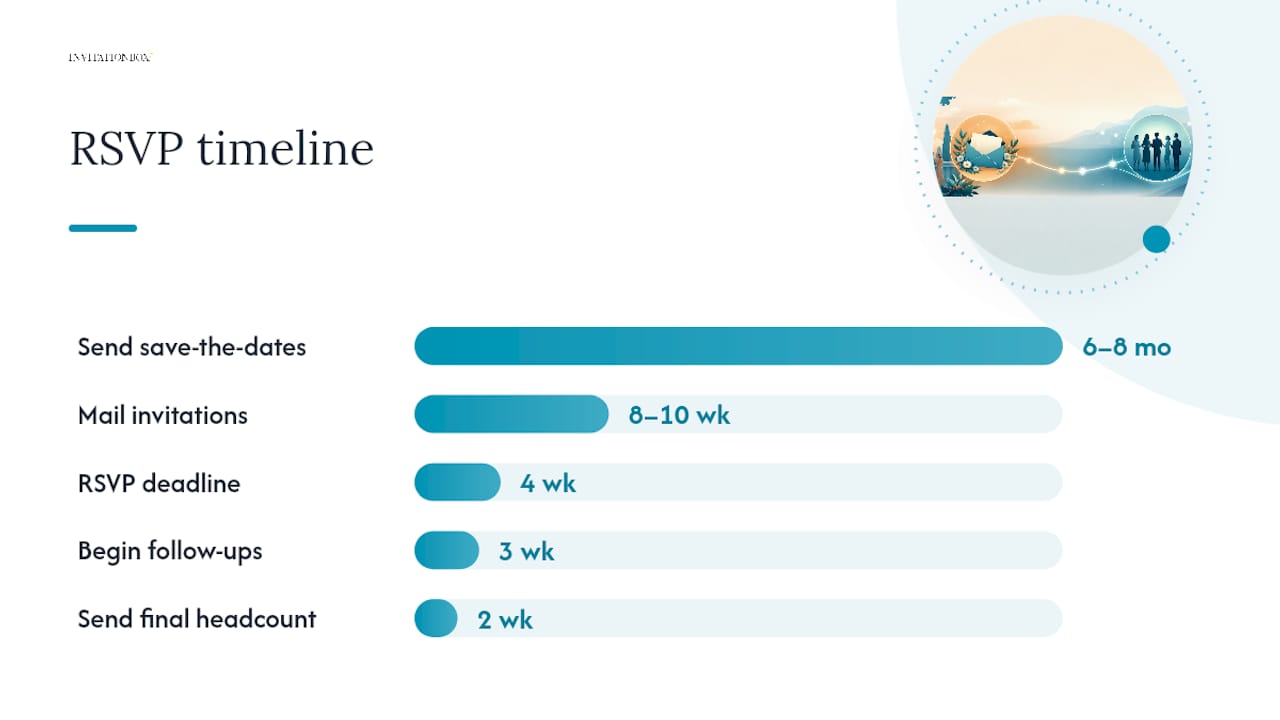
Recommended timeline:
- 6–8 months out: Send save-the-dates (include your wedding website URL)
- 8–10 weeks before the wedding: Mail paper invitations (or send digital invites)
- 4 weeks before the wedding: RSVP deadline closes
- 3 weeks before: Begin following up with non-responders
- 2 weeks before: Provide final headcount to your caterer and venue
Tracking checklist:
- Designate one spreadsheet or platform dashboard as your master guest list from day one
- Log phone and mailed replies into that system the same day you receive them
- Export your final list as a CSV for your caterer, seating chart tool, and day-of coordinator
- Track meal choices and dietary restrictions in separate columns so you can sort quickly
Follow-up scripts:
- Text or email (two weeks before deadline): “Hi [Name]! We’re so excited about the wedding and just wanted to make sure you received your invitation. Please RSVP by [date] at [link].”
- Phone call (one week after deadline, no reply): “Hi [Name], this is [your name]. We’re finalizing our guest count and would love to know if you’ll be joining us. Can you let me know by [date]?”
For destination weddings and multi-event weekends, digital RSVPs are especially valuable because they deliver quick headcount updates and easier integration with travel and hotel blocks. Even if you send paper invitations, consider directing guests to a digital form so you can track confirmations in real time.
Why paper RSVP cards still matter: an Invitationbox perspective on stationery and design
A well-designed paper RSVP card does more than collect a headcount. It tells your guests that this event was planned with care, and it sets the tone before they ever arrive at the venue. When the card stock is heavy, the printing is crisp, and the envelope is pre-addressed in a consistent hand, the whole suite feels like a gift.
At Invitationbox, the RSVP card designs we offer range from clean, modern layouts to ornate embossed styles that complement formal invitation suites. A few product categories worth knowing:
- Embossed RSVP cards: A raised or debossed monogram or motif adds texture and a sense of occasion without extra color printing costs.
- Matched return envelopes: Coordinating the envelope color and weight to the card itself creates a cohesive, polished look.
- Self-inking stampers and embossers: Tools like the Woodcut Stamper or Embosser or the Extra Ornamental Stamper or Embosser let you stamp your return address on dozens of envelopes in minutes, maintaining a handcrafted look without hand-lettering every one.
- Photo RSVP cards: Options like the Fun Holiday Confetti Photo Card and the Believe Photo Card show that reply cards can carry personality and become a keepsake in their own right.
Design tips for paper RSVP cards:
- Keep wording concise: attendance line, meal choice, and deadline only
- Use a font size of at least 10pt so older guests can read it without difficulty
- Place a small QR code on your details card (not the main invitation) to offer an online option without cluttering the suite
- Use a stamper or embosser for return addresses to keep the look consistent across a large guest list
Pro Tip: A self-inking stamper like the Horseshoe Stamper or Embosser or the Vintage Seahorse Stamper or Embosser can address return envelopes in a fraction of the time it takes to write each one by hand. Pair it with a matching custom stamper for your outer envelopes and the whole suite comes together beautifully.
Key Takeaways
The most practical RSVP strategy for most U.S. weddings is a hybrid: paper cards for formality and keepsake value, digital tracking for speed and accuracy.
| Point | Details |
|---|---|
| Online RSVPs win on speed and cost | Digital forms deliver replies in days and eliminate printing and return postage costs. |
| Paper cards signal formality | Mailed RSVP cards suit black-tie and traditional events and create a sentimental keepsake. |
| Hybrid reduces friction | A QR code on a details card lets you send a formal suite while tracking responses digitally. |
| Set your deadline 4 weeks out | An RSVP deadline about one month before the wedding gives time to follow up and finalize headcount. |
| Invitationbox for paper suites | Invitationbox offers embossed RSVP cards, stampers, and addressing tools to keep your paper suite polished and production fast. |
The case for letting your guest list decide
Most wedding planning advice frames the RSVP decision as a style choice, but the more useful lens is your guest list. A 200-person wedding with a wide age range will almost always benefit from a hybrid approach, not because it looks better, but because it actually works. Your 70-year-old aunt and your college roommate have genuinely different comfort levels with online forms, and designing your RSVP system around only one of them means more follow-up calls for you.
What often gets overlooked is the operational cost of going all-paper with a large guest list. Manual transcription of 150 reply cards into a spreadsheet takes real time, and a single misread handwritten name can create a seating chart headache the week before your wedding. Digital tracking is not just convenient; it reduces a specific, predictable source of error.
That said, there is something a digital export will never replicate: the stack of handwritten reply cards you find in a box years later. For couples who value that, the extra administrative work of paper RSVPs is a fair trade. The key is making that choice deliberately, not by default.
Invitationbox makes your paper RSVP suite easy to produce
If you have decided that paper RSVP cards belong in your wedding suite, the biggest practical challenge is production time: printing, addressing, and assembling dozens or hundreds of envelopes without losing your mind or your weekend.
Invitationbox offers customizable RSVP cards, matched return envelopes, and a range of self-inking stampers and embossers that cut addressing time dramatically while keeping the handcrafted look intact. The Paw Print Stamper or Embosser and the Jolly Rogerette Stamper or Embosser are just two examples of the motif options available for personalizing your return address stamp. For couples who want a more ornate finish, the Extra Ornamental Stamper or Embosser adds an upscale touch to every envelope.
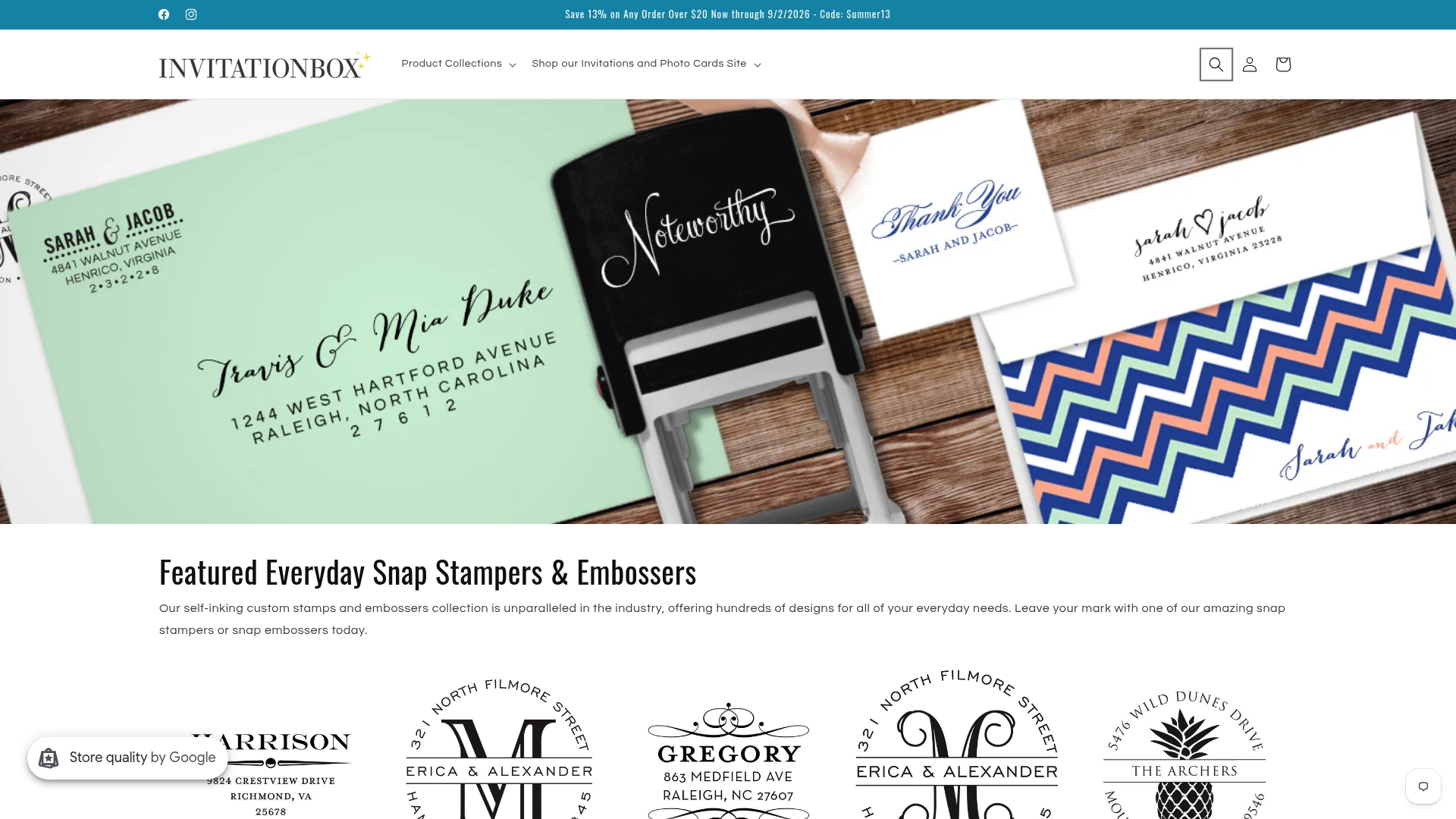
Browse the full collection of personalized wedding invitations and stationery tools at Invitationbox to find the right combination for your suite, and place your order early enough to allow time for assembly and mailing.
Further reading and useful sources
- Invitation Etiquette — Emily Post
- Online Wedding RSVPs: Pros & Cons – Destination Weddings Blog
- An Expert Guide to Wedding RSVP Cards & Complete Stationery … - Zola
- Digital vs. Paper Wedding RSVPs: Cost, Response Rates, and What Guests Prefer | KnotUploader
- Digital RSVPs vs Traditional Paper: Which is Better? | Eternally
- Do You Need RSVP Cards With Wedding Invitations? Paper vs O… | SnapInvite
Recommended
- When is the Best Time to Send Out Party Invitations? – InvitationBox.com
- How Early Should Engagement Party Invitations Be Sent? – InvitationBox.com
- From Save-the-Dates to Engagement Party Invitations: Coordinating Your – InvitationBox.com
- 5 Unique Wedding RSVP Card Designs That Guests Love – InvitationBox.com