

Waterproof Stamp Ink: What Crafters Need to Know
Yes, waterproof stamp inks exist, and for most hobbyists, a pigment-based waterproof ink is the best all-around choice. Pigment inks dry to a water-resistant finish that holds crisp lines under watercolor washes, humid hands, and the occasional coffee spill, while still working beautifully on cardstock, photos, and most craft surfaces. That combination of durability and detail is exactly what makes a stamped card, tag, or invitation look intentional rather than smudged.
- Best for most crafters: pigment-based waterproof ink pads
- Best for mixed media: waterproof dye inks made for watercolor layering
- Best for plastic, wood, or fabric: solvent or specialty archival inks
If you’d rather skip the trial-and-error, Invitationbox pairs its stamps and embossers with ink recommendations built for exactly this kind of hobbyist project.
Key Takeaways
Pigment-based waterproof ink is the most reliable all-around choice for hobbyists because it resists water once cured and holds fine detail across most craft surfaces.
| Point | Details |
|---|---|
| Choose pigment ink first | It offers the best balance of water resistance and detail retention for most craft projects. |
| Match ink to surface | Use solvent or specialty inks for plastic and fabric, and pigment or waterproof dye for paper. |
| Test before committing | Stamp, dry fully, rinse with water, and blot to confirm true waterproof performance. |
| Refill smart, store smarter | Re-ink pads in small amounts and store bottles upright and capped to prevent drying out. |
| Check safety labels | Look for ASTM D-4236 or skin-safe claims before using ink near kids or on skin. |
| Pair ink with the right stamp | Invitationbox’s refillable self-inking stampers and embossers are built to work with these waterproof ink types. |
Table of Contents
- Best Waterproof Stamp Ink Picks for Hobbyists
- What Does “Waterproof” Actually Mean for Stamp Ink?
- Which Surfaces Work Best With Waterproof Ink?
- How Do You Use Waterproof Ink With Different Stamp Types?
- How Do You Test If Stamp Ink Is Truly Waterproof?
- Refills, Storage, and Keeping Your Ink Pad Fresh
- Are Waterproof Stamp Inks Safe and Non-Toxic?
- What Should You Check Before Buying Waterproof Stamp Ink?
- Why InvitationBox Stamps Work Well With Waterproof Ink
- A Craft-Tested Take on Choosing Waterproof Ink
- Get Stamps Built for Waterproof Ink
- Frequently Asked Questions
- Sources
Best Waterproof Stamp Ink Picks for Hobbyists
You don’t need to test a dozen brands to find something that works. A few product families consistently show up in craft reviews and manufacturer spec sheets as genuinely waterproof once cured, and each serves a slightly different project type.
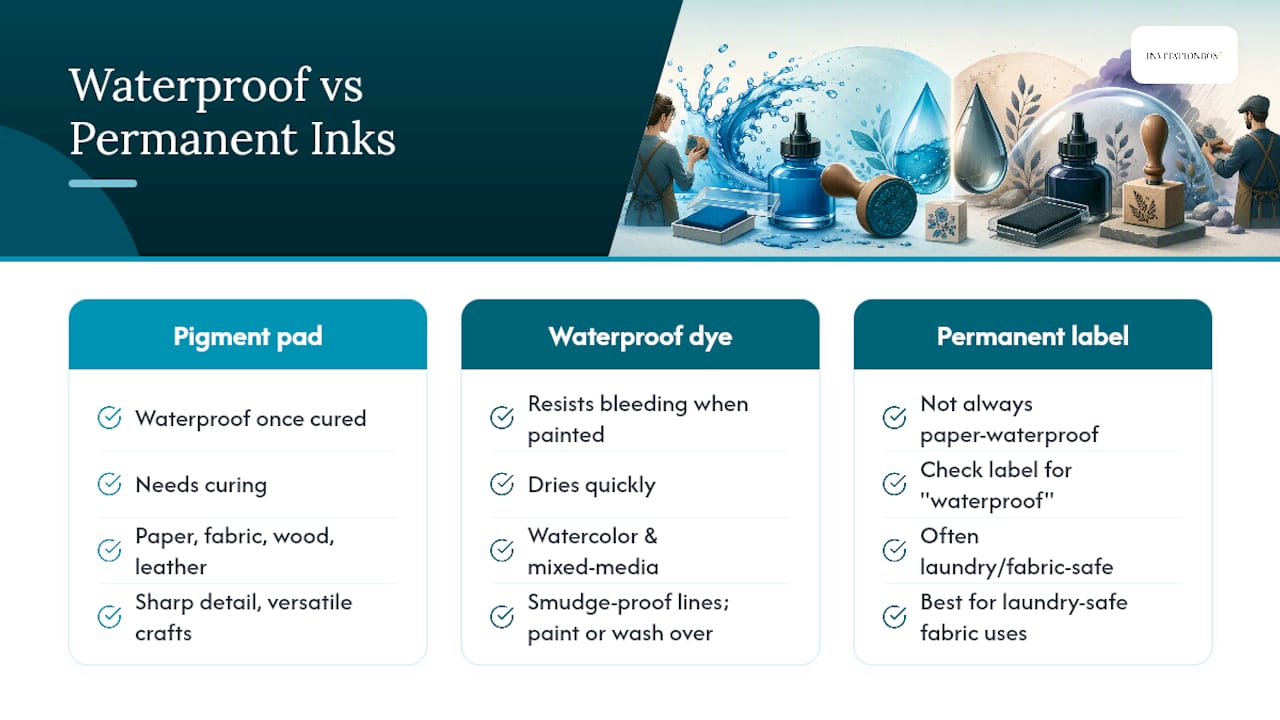
Your top pick, if you only buy one: a pigment-based waterproof pad. Pigment ink sits on top of the paper rather than soaking in, which gives it better water resistance and sharper detail retention than most dye inks. Pelikan’s Stamp Ink 84 is a good example. The manufacturer specifically markets it as waterproof and suitable across fabric, wood, and leather, which tells you it’s built for more than just paper.
For watercolor and mixed-media projects, look at a waterproof dye option instead. Jacquard’s ColorPad dries quickly, resists bleeding when you paint over it, and is labeled acid-free and non-toxic. Jane Davenport’s INKvincible line fills a similar niche for artists who want smudge-proof lines they can immediately paint or wash over.
Pro Tip: Before buying, check the label for the word “waterproof” specifically. “Permanent” often just means it won’t wash off fabric in the laundry, not that it survives direct water contact on paper.
If you’re shopping online, glance at the reviews first. Buyers on Trustpilot frequently flag shipping reliability and product consistency for specialty ink sellers, which is worth a quick check before you commit to a bottle you can’t easily return.
What Does “Waterproof” Actually Mean for Stamp Ink?
Waterproof, in stamp ink terms, means the dried image resists running, smearing, or bleeding when it touches water. That’s an important distinction: it’s about performance after the ink cures, not while it’s wet. Every waterproof ink still needs its normal drying window before it earns that label.
The craft market breaks down into three main ink chemistries, and each handles water resistance differently.
- Dye inks: thin, fast-absorbing, and vivid, but only some formulations are waterproof. Crafter’s Companion’s Finesse Waterproof Inkpad is a waterproof dye specifically engineered to hold detail under watercolor washes.
- Pigment inks: thicker and slower to dry, but they sit on the surface and resist water exceptionally well once set, which is why The Frugal Crafter recommends them for embossing and watercoloring alike.
- Solvent and archival inks: built for non-porous surfaces like plastic, metal, and glass, with strong water and fade resistance but a noticeable chemical smell in some formulations.
Terminology matters here. “Archival” typically points to lightfastness and acid-free composition, “permanent” usually refers to fabric or surface adhesion, and “waterproof” is the specific claim you want if your project will get wet.
Which Surfaces Work Best With Waterproof Ink?
Not every waterproof ink behaves the same way once it hits a different material. Matching ink chemistry to surface is the single biggest factor in avoiding a smeared, patchy stamp.
- Uncoated cardstock and paper: pigment or waterproof dye inks both perform well and dry with crisp edges.
- Coated or glossy photo paper: pigment inks tend to bead up unless labeled specifically for coated stock; check the product page first.
- Plastic and other non-porous surfaces: solvent-based or specialty quick-dry inks are the safer bet, since standard dye ink simply won’t adhere.
- Fabric: look for inks labeled for textile use, and plan to heat-set with an iron once the design is fully dry.
- Skin: only use inks explicitly marketed as skin-safe. Never repurpose a general craft ink for body stamping.
Pro Tip: If you’re stamping on plastic favor tags, gift boxes, or laminated cards, test a small corner first. A solvent ink that looks fine wet can still smear if you touch it within the first few minutes.
Fabric and mixed-media projects often benefit from a light heat-set even when the ink claims to be waterproof on its own, since heat helps the pigment bond more permanently to fibers.
How Do You Use Waterproof Ink With Different Stamp Types?
Compatibility here isn’t optional. Using the wrong ink chemistry in a self-inking stamp can gum up the internal pad or void the mechanism’s warranty, so it pays to know what you’re working with before you refill anything.
- Self-inking stampers: these use a built-in pad designed for water-based ink. Stick to the manufacturer’s recommended refill, most self-inking mechanisms are engineered around a specific viscosity and won’t tolerate solvent-based ink well.
- Rubber stamps on a separate pad: you have the most flexibility here. Press the stamp firmly and evenly onto the pad, then stamp with consistent pressure. Slower, deliberate pressure gives pigment ink time to transfer fully.
- Pre-inked stamps: these come pre-loaded and typically use a specific dye or pigment blend chosen by the manufacturer. Re-inking usually means adding a few drops of the matching refill ink rather than swapping chemistries.
Solvent and oil-based inks can damage the internal components of self-inking stamps that were engineered for water-based formulas. Always check the manufacturer’s ink recommendation before refilling.
How Do You Test If Stamp Ink Is Truly Waterproof?
Never assume. A quick, five-minute test before your real project saves you from ruining a finished card or invitation.
- Stamp the image on the actual paper or surface you’ll use for the project.
- Let it dry for the manufacturer’s recommended time, usually a few minutes for dye ink and up to 24 hours for some pigment formulas.
- Run the stamped area under a light stream of water, or dab it with a wet cotton swab.
- Blot gently with a paper towel and inspect for bleeding, smearing, or color loss.
Drying time varies quite a bit by chemistry. Dye inks often set within minutes, pigment inks can take longer because they sit on top of the paper rather than absorbing into it, and solvent inks fall somewhere in between depending on the surface. Humidity, ink saturation, and paper porosity all shift these windows in either direction.
Price ranges are modest across the category. Small waterproof ink pads typically run at affordable prices, while refill bottles usually cost less per project over time, an easy way to stretch your stamping budget if you use a design repeatedly.
Refills, Storage, and Keeping Your Ink Pad Fresh
A waterproof ink pad that dries out too soon isn’t waterproof, it’s just gone. A little maintenance discipline keeps your ink performing the way it did on day one.
- Re-ink pads with a few drops at a time, letting the pad absorb before adding more to avoid oversaturation.
- Store bottles upright, capped tightly, and away from direct heat or sunlight.
- Keep pads in their cases when not in use to slow evaporation.
Pro Tip: Rotate between two smaller pads instead of one large one for colors you use occasionally. Small-batch refills stay fresher longer than a big pad that sits untouched for months.
Are Waterproof Stamp Inks Safe and Non-Toxic?
Most craft-grade waterproof inks are labeled non-toxic and conform to ASTM D-4236, the standard safety labeling requirement for art materials sold in the US. That label means the product has been evaluated for chronic health hazards, not that it’s automatically safe for skin contact.
- Look for “skin-safe” or “cosmetic-grade” specifically if you’re stamping on skin for a project or event.
- Avoid solvent-based inks near children or in poorly ventilated spaces.
- Check the manufacturer’s safety data sheet if you’re working with an unfamiliar archival or solvent formula.
What Should You Check Before Buying Waterproof Stamp Ink?
A little label-reading upfront prevents most buyer’s remorse. Run through this checklist while you shop:
- Does the surface list on the packaging match your project (paper, plastic, fabric, skin)?
- Is the drying time realistic for your workflow?
- Can you buy a refill, or are you stuck replacing the whole pad?
- Does it carry a non-toxic or ASTM D-4236 safety claim if kids will use it?
- Is the color range wide enough, and is it labeled lightfast or archival if longevity matters?
Watch for a few red flags too:
- A “permanent” claim with no surface list is vague marketing, not a spec.
- No refill option for a self-inking unit means you’ll be buying a whole new stamp eventually.
- A strong chemical smell on a product marketed for kids’ crafts or indoor use is worth skipping.
If you want simplicity, a pre-inked or self-inking stamp is the easier path. If you want full control over color and ink chemistry, pads and bottles give you more flexibility to switch inks per project.
Why InvitationBox Stamps Work Well With Waterproof Ink
Invitationbox has spent over 19 years building self-inking stampers, embossers, and its exclusive Snap Stamp system, all designed with refillable, water-based pads that pair cleanly with the waterproof inks covered above. That matters for hobbyists because a stamp is only as good as what you can put in it long-term.
- Refillable pad systems mean you’re not locked into a single ink chemistry forever.
- Custom designs, from monograms to holiday motifs, are built to hold fine detail, which matters when you’re layering watercolor over a stamped image.
- Educational content on the site, including comparison guides for stamper styles, helps first-time buyers match a stamp to their ink and project needs.
A stamp that takes a good refill is worth more long-term than one that locks you into a single ink cartridge.
A Craft-Tested Take on Choosing Waterproof Ink
My honest take, after digging through spec sheets and craft forums for this guide: pigment-based waterproof ink is the safest default recommendation precisely because it forgives beginner mistakes. Dye inks reward a light, confident touch; pigment ink is more patient with heavier hands and slower stamping, which is where most hobbyists actually start.
I’ve watched more than one holiday card project get ruined by a “permanent” ink that bled the second a stray raindrop hit the envelope. Waterproof labeling exists for a reason. Check it before you buy, not after the cards are already addressed.
Get Stamps Built for Waterproof Ink
Invitationbox skips the guesswork of matching a stamp to the right ink, every stamper and embosser in the lineup is built around refillable, water-based pad systems that work with the waterproof inks in this guide.
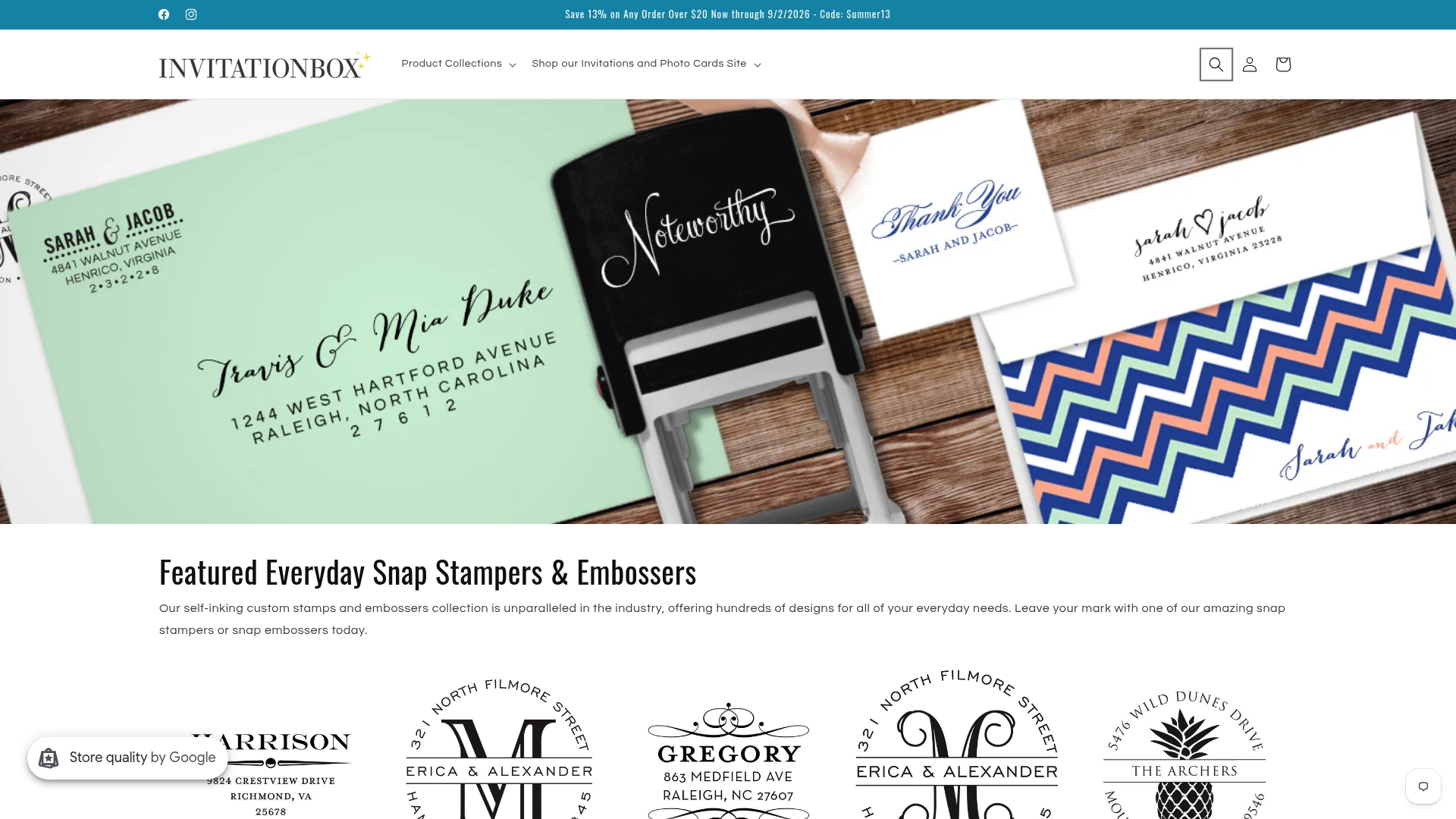
- Refillable pads mean you can switch ink colors or chemistries as projects change.
- Custom monogram and motif designs hold fine detail under pigment and dye inks alike.
- Friendly ordering support if you’re unsure which stamp size or refill fits your project.
Browse the Classic Scroll Square Stamper to see a refillable option built for exactly this kind of waterproof ink pairing, or explore the full stamper lineup to find your match.
Frequently Asked Questions
Is stamp ink actually waterproof, or just water-resistant? True waterproof stamp inks, once fully dry, resist running or smearing even under direct water exposure. Water-resistant inks may hold up to light moisture but can still bleed under a heavier splash, so check the label wording carefully.
Can I make DIY waterproof stamp ink at home? Most homemade dye solutions won’t achieve reliable water resistance the way commercial pigment or solvent inks do. For any project that needs to survive moisture, a purpose-made waterproof ink pad is worth the small cost over a homemade mix.
Does waterproof stamp ink work on skin? Only if it’s specifically labeled skin-safe or cosmetic-grade. General craft waterproof inks, even non-toxic ones, aren’t formulated or tested for direct skin contact.
How long does waterproof stamp ink take to dry? It depends on the chemistry: dye inks often set within minutes, while pigment inks can take considerably longer since they sit on the surface rather than absorbing into the paper. Always follow the manufacturer’s stated drying window before testing water resistance.