

Best Wedding Invitation Sites for US Couples in 2026
For couples who want custom, heartfelt stationery with embossing and stamping options, Invitationbox is our top pick. If you need fast photo invites, a template-driven print shop fits better. For zero-waste or destination weddings, a digital-first platform keeps things simple and eco-friendly. Whatever your style, the golden rule is the same: order samples first and start the process well before your mailing date.
The table below gives you an instant snapshot of the best wedding invitation site types and who each one genuinely serves.
| Site Type | Best For | Price Shape | Customization | Sample Kit? |
|---|---|---|---|---|
| Invitationbox | Custom embossing, stamps, full suites | Mid-range | High | Yes |
| Template-driven print shops | Fast, affordable volume orders | Budget | Moderate | Often |
| Photo-invite specialists | Couples with engagement photos | Budget–mid | Moderate | Sometimes |
| Digital-first platforms | Eco, destination, small weddings | Free–low | Moderate | N/A |
| Boutique letterpress studios | Luxe, tactile, heirloom quality | Premium | Very high | Yes |
| Marketplace custom shops | Unique, handcrafted, one-of-a-kind | Mid–premium | Very high | Varies |
| Eco-focused sites | Sustainable paper, plant-based inks | Mid | Moderate | Sometimes |
| Design-studio services | Full creative direction, hands-off | Premium | Very high | Yes |
| Hybrid registry-invite platforms | Convenience, all-in-one planning | Mid | Low–moderate | Rarely |
| DIY template makers | Budget, creative control, print-at-home | Free–low | High (self-serve) | N/A |
The short version: match your site type to your priorities, request a physical sample before you commit to a full run, and coordinate your stationery suite from save-the-dates through thank-you cards for a cohesive look your guests will remember.
Table of Contents
- What should you expect from each type of invitation site?
- How do you choose the right wedding invitation site?
- Why Invitationbox stands out for custom wedding stationery
- Key Takeaways
What should you expect from each type of invitation site?
Invitationbox
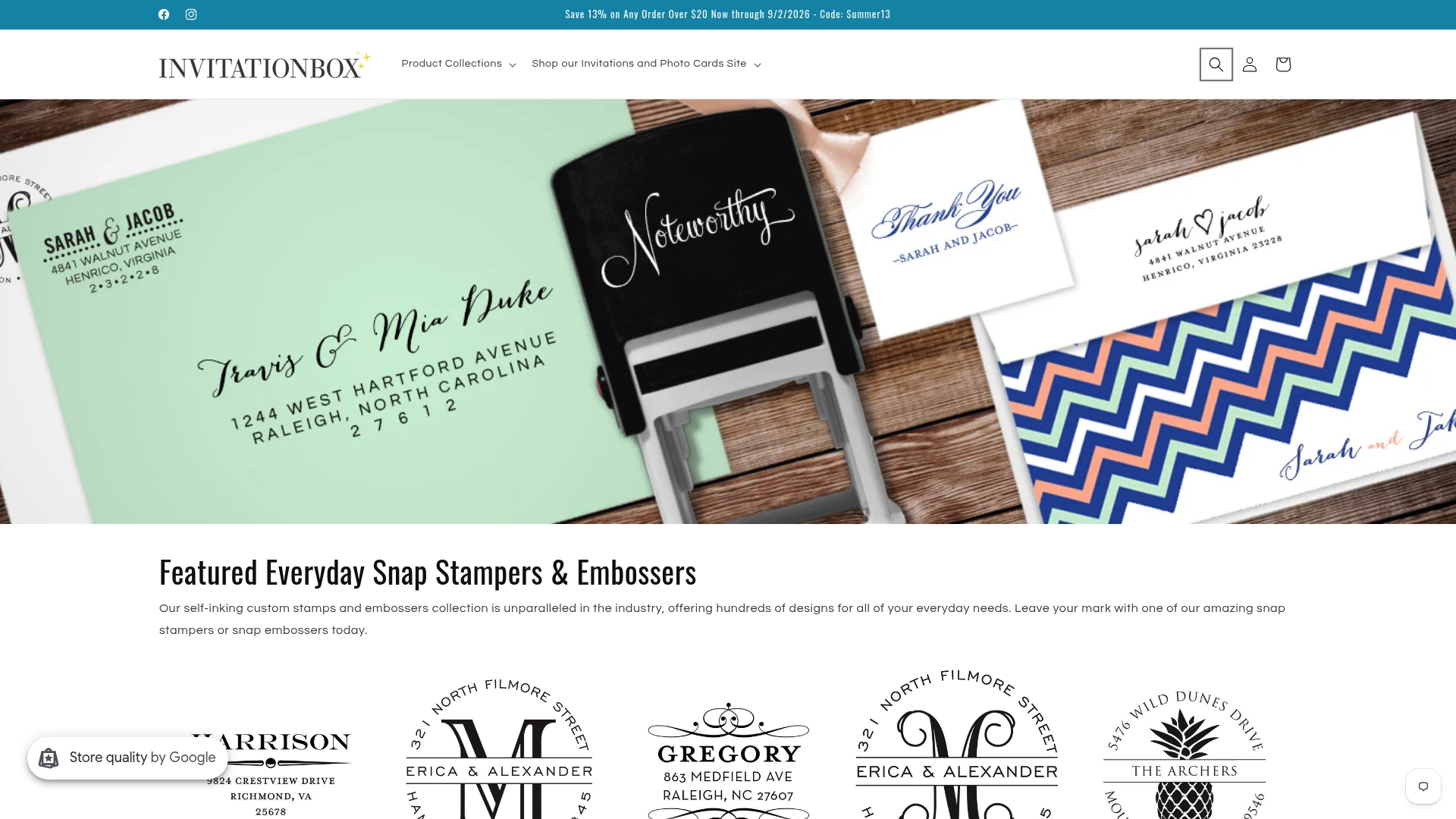
Invitationbox has been producing personalized stationery for over 19 years, and that depth shows in the product range. Couples can choose from custom self-inking stamps, embossers (including the Corner Scrolls Square Stamper or Embosser, Classic Scroll Square Stamper or Embosser, and Modern Scroll Stamper or Embosser), folded note cards, and photo cards. The proprietary Snap Stamp system lets you create self-inking stamps with motifs that match your wedding aesthetic, from ornamental to modern. Matching stationery suites covering save-the-dates, programs, menus, and thank-you cards are all available, which design experts at The Knot consistently recommend for keeping a cohesive visual identity across every piece of wedding paper.
Pros:
- Deep embossing and stamping catalog, including the Horseshoe Stamper or Embosser, Jolly Rogerette Stamper or Embosser, and Extra Ornamental Stamper or Embosser
- Full matching stationery suites available
- US-based customer support and proofing process
- Over 19 years of personalized stationery experience
- Notepads like the Your To-Do List Notepad and Productive AF Notepad make thoughtful bridal party gifts
Cons:
- Not the fastest option for last-minute bulk orders
- Premium embossing adds to per-unit cost
Sample kit: Available. Request one before committing to a full suite.
Template-driven print shops
These sites live on volume. You pick a template, upload your text, choose a paper stock (usually matte, glossy, or linen), and receive printed invites within a week. Per-invite costs drop sharply at quantities above 100, making them ideal for large guest lists. Customization is moderate: you can change colors, fonts, and wording, but structural design changes are rarely possible. Proofing is typically digital only, so what you see on screen is what you get. Check upload limits and preview quality carefully before bulk ordering, since some editing platforms report intermittent availability issues.
Pros: Low per-invite cost, fast turnaround, easy online editor Cons: Limited design flexibility, digital-only proofing, generic feel at scale
Photo-invite specialists
If your engagement photos are beautiful, putting them on the invitation makes sense. These sites are built around photo upload workflows, with templates that frame images cleanly. Paper stocks tend toward matte or lustre finishes that flatter photography. Turnaround is quick, usually 3–7 business days, and per-invite costs stay reasonable. Matching stationery is sometimes available but rarely as complete as a full-suite provider.
Pros: Photo-forward designs, fast production, good for casual-to-semi-formal weddings Cons: Design options outside the photo frame are limited; suite matching is inconsistent
Digital-first platforms
Digital invitations come with built-in RSVP tracking, auto-reminders, and guest messaging tools that make managing a large guest list genuinely easier. There is no printing cost, no postage, and no paper waste. Platforms like VistaCreate offer thousands of templates and the ability to create animated or digital invitations with resizing and export options for online sharing. For eco-focused couples or those with many remote guests, digital is hard to beat on practicality.
Pros: Free or very low cost, instant delivery, RSVP tracking built in, eco-friendly Cons: Not appropriate for formal or traditional weddings, no physical keepsake, some guests may miss or ignore digital invites
Boutique letterpress studios
Letterpress is the gold standard for tactile luxury. The impression left in thick cotton paper is something guests feel before they read a word. These studios typically offer deep customization, including custom dies, foil stamping, and hand-assembled suites. Production takes 2–4 weeks minimum, and per-invite costs reflect the craft involved. Always request a sample kit; the difference between a screen preview and the finished card is dramatic.
Pros: Heirloom quality, deeply tactile, highly customizable Cons: Premium pricing, longest lead times, not budget-friendly for large guest lists
“Ordering a physical sample kit gives couples accurate expectations of paper weight, finish, and how ink colors translate from screen to print — details that are impossible to judge online.” — The Knot
Marketplace custom shops
Platforms hosting independent designers give you access to truly one-of-a-kind work. You can commission a designer to build something from scratch or buy a semi-custom template and have it personalized. Quality and turnaround vary by seller, so read reviews carefully and confirm production timelines before ordering. Matching stationery is available from many sellers but requires coordination.
Pros: Unique designs, supports independent artists, wide style range Cons: Quality varies, longer lead times, coordination across a suite requires effort
Eco-focused sites
These sites specialize in recycled paper, seed paper (guests can plant the invite after the wedding), and plant-based inks. Per-invite costs are mid-range, and the environmental story is a genuine differentiator for couples whose wedding values sustainability. For more ideas on sustainable stationery, the eco-friendly bridal shower invitation guide from Invitationbox is a practical starting point.
Pros: Genuine sustainability credentials, unique paper textures, meaningful guest experience Cons: Fewer design options than mainstream printers, seed paper can feel informal
Design-studio services
Full-service design studios handle everything: concept, typography, illustration, printing, and assembly. You show up with a vision and they deliver a finished suite. This is the most hands-off option and the most expensive. Lead times of 2–6 weeks are standard, and most studios offer physical proofs as part of the process.
Pros: Completely bespoke, professional creative direction, high-touch service Cons: Highest price point, longest lead times, requires early planning
Hybrid registry-invite platforms
Some wedding planning platforms bundle invitation tools with registry management and wedding websites. Convenience is the main draw: one login, one vendor, one place for guests to RSVP and find your registry. Customization is typically limited to template adjustments, and the invitation quality rarely matches a dedicated stationery provider.
Pros: All-in-one convenience, easy guest management Cons: Limited design quality, not suitable for formal or luxe weddings
DIY template makers
Tools like Avery’s wedding invitation maker and Canva’s invitation creator let you design, download, and print at home or order professional printing directly. Avery’s platform includes a built-in QR-code generator for linking to RSVP forms or wedding websites, which is a genuinely useful feature. Adobe Express offers a free wedding invitation maker with clean templates and export options. The creative control is high, but the time investment is real.
Pros: Maximum creative control, lowest cost, print-at-home flexibility Cons: Time-intensive, home printing quality varies, no physical proofing support
Pro Tip: Before placing a large DIY print order, always verify final proof quality and upload limits on the platform. Some editing tools have intermittent availability issues that can delay your timeline.
How do you choose the right wedding invitation site?
Questions to ask before you order
- What paper weight and finish options are available, and can I see a physical sample?
- How long does digital proofing take, and how many revisions are included?
- Do you offer bulk discounts at 100, 150, or 200 units?
- What is your policy on return postage or reprints if there is a printing error?
- Is tracking included with standard shipping, or is it an add-on?
- Are international shipping fees calculated at checkout, or do I need to contact support?
Red flags to watch for
- No sample kit or physical proof option available
- Production time listed as a vague range with no guaranteed ship date
- No proofing step before printing begins
- Unclear or missing return and refund policy
- No customer service contact method beyond an email form
Ordering timeline
| Milestone | When to Act |
|---|---|
| Book your venue and set the date | 12+ months out |
| Order save-the-dates | 6–8 months before the wedding |
| Request invitation samples | 4–5 months before the wedding |
| Finalize and order invitations | 3–4 months before the wedding |
| Mail invitations | 6–8 weeks before the wedding |
| RSVP deadline | 3–4 weeks before the wedding |
| Order day-of stationery (programs, menus) | 6–8 weeks before the wedding |
| Mail thank-you cards | Within 2–3 weeks after the wedding |
Pro Tip: When coordinating with other wedding vendors, Love You More Flower Boutique’s wedding planning resources offer helpful guidance on timing stationery alongside floral and decor decisions so everything arrives on schedule.
Pros and cons at a glance
Printed invitations:
- Formal, tactile, and keepsake-worthy
- Expected at traditional and religious ceremonies
- Higher cost per guest, plus postage
- No built-in RSVP tracking (unless you add a QR code)
- Longer lead time required
Digital invitations:
- Free or very low cost
- Instant delivery, no postage
- Built-in RSVP tracking, auto-reminders, and guest messaging
- Not appropriate for formal or black-tie events
- Some older guests may struggle with digital formats
Etiquette considerations
A printed invitation signals formality and intentionality. For black-tie, religious, or multi-day wedding events, printed is the expected standard. Digital invitations are fully acceptable for casual, outdoor, or destination weddings, and increasingly common for any wedding where the couple prioritizes sustainability. The one etiquette rule that holds across both formats: send save-the-dates early, especially if guests are traveling.
Pro Tip: The hybrid approach works beautifully for many couples: send a digital save-the-date 6–8 months out, then follow with a printed formal invitation 6–8 weeks before the wedding. You can embed a QR code on the printed invite linking to your RSVP page or wedding website, which Avery’s maker and similar tools generate automatically. This gives you the formality of print with the tracking convenience of digital.
For couples exploring creative personalization ideas across both formats, the DIY wedding invitation ideas guide from Invitationbox is full of practical inspiration.
Why Invitationbox stands out for custom wedding stationery
Invitationbox brings something most online invitation sites simply do not offer: a deep catalog of custom embossers and stampers that let you add a personal, handcrafted touch to every piece of your wedding stationery. Whether you choose the elegant Corner Scrolls Square Stamper or Embosser, the timeless Classic Scroll Square Stamper or Embosser, or the sleek Modern Scroll Stamper or Embosser, each one adds a dimension of texture and personality that no printed template can replicate.
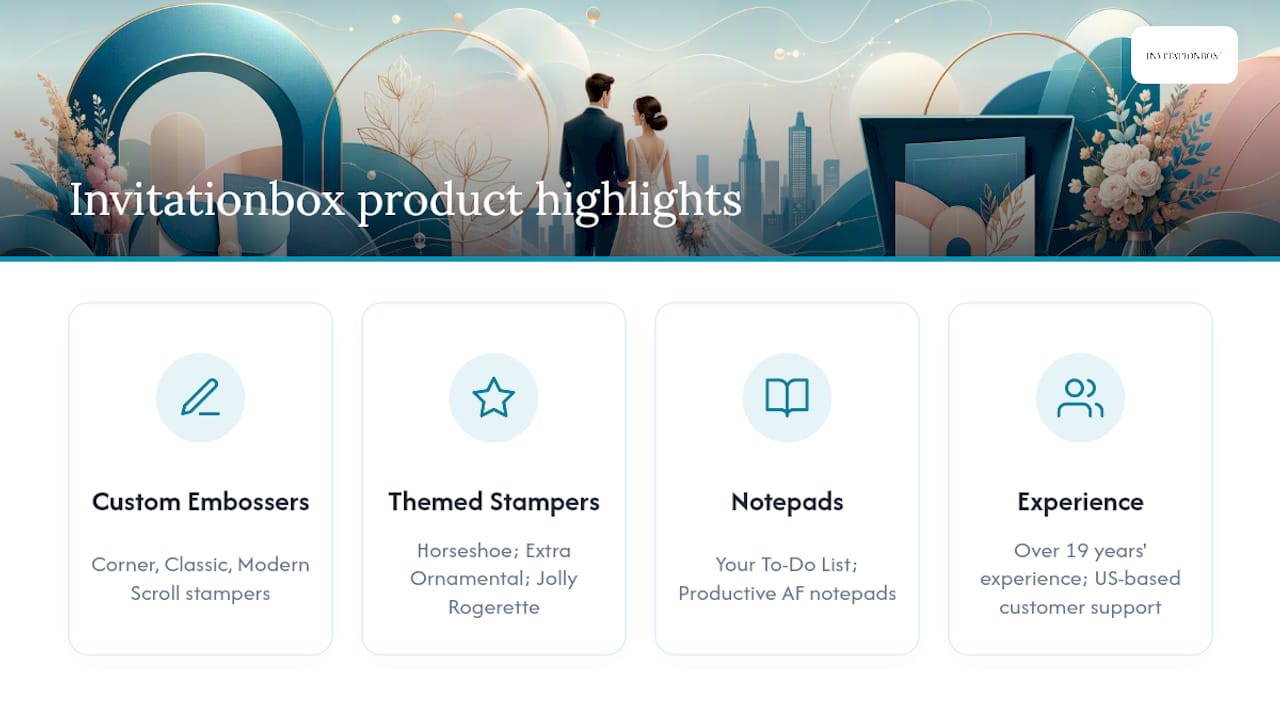
The product range goes well beyond embossers. Couples can find themed stampers like the Horseshoe Stamper or Embosser and the Extra Ornamental Stamper or Embosser for unique stationery finishes, or the playful Jolly Rogerette Stamper or Embosser for couples with a sense of adventure. Notepads such as the Your To-Do List Notepad and Productive AF Notepad make thoughtful, practical gifts for bridal parties. With over 19 years of experience in personalized stationery and US-based customer support, Invitationbox is built for couples who want their wedding paper to feel as personal as the day itself. Browse the full collection and request a sample to see the quality for yourself before you order.
Key Takeaways
The most effective approach to choosing a wedding invitation site is to match your site type to your style, budget, and timeline, then request a physical sample before placing your full order.
| Point | Details |
|---|---|
| Order samples first | A physical sample reveals paper weight, finish, and color accuracy that screens cannot show. |
| Start 10–12 weeks out | Allow time for proofing, production, and shipping so invites mail 6–8 weeks before the wedding. |
| Match your full suite | Choose a provider that covers save-the-dates through thank-you cards for a cohesive look. |
| Digital works for casual and eco weddings | Built-in RSVP tracking and zero postage cost make digital ideal for small or eco-focused events. |
| Invitationbox for custom embossing | Invitationbox offers stampers, embossers, and full stationery suites with US-based support. |
What makes a wedding invitation site worth your time
The conversation around wedding invitations tends to focus on aesthetics, and that is understandable. But the couples who end up happiest with their stationery are usually the ones who treated the invitation site decision the same way they treated their venue decision: with a site visit (or sample kit) before signing anything.
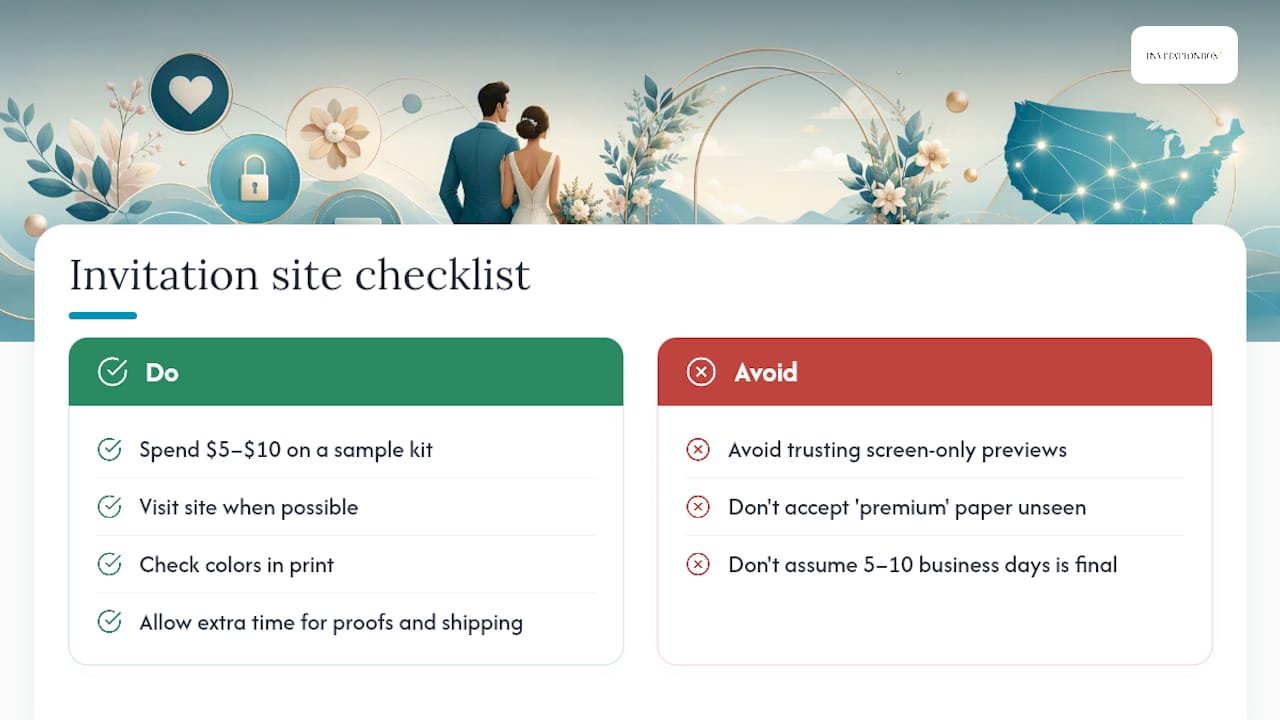
The thing most articles skip over is the gap between what a site looks like in a browser and what it delivers to your door. Color shifts between screen and print are real. Paper weight descriptions like “premium” mean nothing without holding the card. And a production timeline listed as “5–10 business days” can quietly become three weeks when you factor in proofing rounds, shipping, and the inevitable revision.
My honest recommendation: spend $5–$10 on a sample kit from any site you are seriously considering. That single step eliminates more regret than any amount of reading reviews. And if you want embossing, custom stamping, or a stationery suite that holds together visually from the save-the-date to the thank-you card, Invitationbox has the depth of product and the years of experience to deliver it. The proprietary Snap Stamp system alone is worth exploring if you want something no other couple’s invitation will have.
Useful sources and further reading
A few resources worth bookmarking as you plan your wedding stationery:
- The 20 Best Websites for Wedding Invitations
- The Knot
- Free Wedding Invitation Maker | Adobe Express
- Create Wedding Invitations with Wedding Invitation Card Maker | VistaCreate
- Wedding Invitation Maker | Design & Print Online | Avery.com
- The 6 Best Digital Wedding Invitations
- Canva wedding invitation creator
- invitationbox.com