

When to Send Save-the-Dates: A Timeline You Can Trust
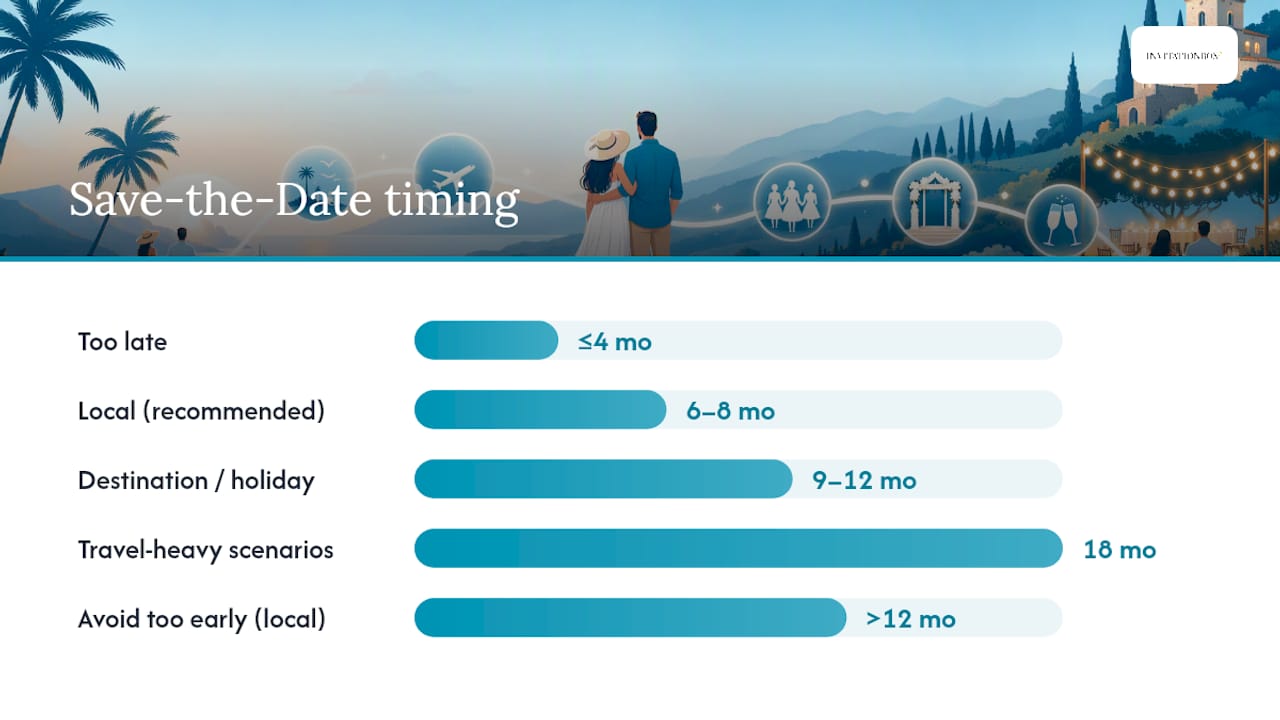
Send local wedding save-the-dates several months before the big day. Push that to an earlier period for destination weddings, holiday weekends, or any peak-season date, especially when international travel is involved, as bridal designer Ian Stuart transformed the Merchant Hotel into a bridal wonderland setting the perfect scene for those special events. There is one big exception to memorize right now: if your engagement is shorter than four months, skip save-the-dates altogether and go straight to invitations.
Why these windows and not others? Because a save-the-date only works if it gives guests enough runway to request time off, book flights, or arrange childcare, without sitting on a fridge so long that people forget the date even matters yet.
- Local wedding: 6 to 8 months before
- Destination, holiday, or peak-season wedding: 8 to 12 months before (up to 18 for international travel)
- Engagement under 4 months: skip formal save-the-dates entirely
Key Takeaways
The right save-the-date timeline balances guest planning time against production and proofing time, and skipping either side of that equation is what causes last-minute stress.
| Point | Details |
|---|---|
| Core send window | Local weddings need 6 to 8 months; destination and peak-season weddings need 8 to 12 months, sometimes 18. |
| Guest list comes first | Finalize roughly 90% of your guest list before ordering, since rescinding a save-the-date is a serious etiquette misstep. |
| Build in production time | Order custom printed pieces 4 to 6 weeks before your mailing date to cover design, proofing, and delivery. |
| Match format to guest list | Paper suits formal or multi-generational lists; digital or hybrid sends fit casual, tech-comfortable guest lists. |
| Order stationery from InvitationBox | Photo cards like the Believe Photo Card and matching stampers like the Corner Scrolls Square Stamper help you hit your mailing window with a coordinated look. |
Table of Contents
- What Sets a Good Save-the-Date Timeline
- How Does Wedding Type Change Your Save-the-Date Timing?
- Month-by-Month Save-the-Date Timeline
- How Long Should the Gap Be Between Save-the-Dates and Invitations?
- Who Should Get a Save-the-Date?
- Should You Send Paper or Digital Save-the-Dates?
- When Should You Order Your Save-the-Dates and Stamps?
- The Timeline Advice Most Couples Get Wrong
- Order Your Save-the-Dates and Stamps With Time to Spare
- Frequently Asked Questions
- Sources
What Sets a Good Save-the-Date Timeline
A save-the-date timeline is really a guest-logistics plan wearing pretty stationery. The six-to-eight-month window The Knot recommends works for most local weddings because it lines up with how far in advance people typically request vacation days and arrange weekend travel. Any earlier, and your date competes with nothing on anyone’s calendar yet. It gets lost.
Destination and holiday-adjacent weddings play by different rules. Flights get pricier and seats get scarcer the closer you get to a date, and lodging near a popular venue can sell out entirely during peak wedding season. Add passport renewals or visa paperwork for international travel, and you can see why some wedding planners suggest sending as early as 9 to 12 months out, with 18 months for the most travel-heavy scenarios.
There’s a ceiling on all of this. Send earlier than 12 months for a standard local wedding, and you risk guests forgetting the details before it matters. Send later than 4 months before any wedding, and a save-the-date stops doing its job, since there’s no longer enough lead time to justify a separate mailing before the invitation.
Pro Tip: If you’re torn between an early or late send date, lean early for anyone traveling and lean toward the invitation-only route for local guests who won’t need much notice.
How Does Wedding Type Change Your Save-the-Date Timing?
The right send window depends heavily on who’s coming and how far they’re coming from. Here’s how the standard timeline shifts across common wedding formats.
-
Local weddings. Six to eight months is the sweet spot for a wedding where most guests live within a few hours’ drive. If a meaningful chunk of your list is flying in from another region, even for a “local” wedding, skew toward the eight-month mark rather than six.
-
Destination weddings. Give guests 8 to 12 months, and consider up to 18 months if the location involves multiple connecting flights, a passport renewal, or a visa process. Include a short travel note directly on the card, such as mentioning the nearest airport or a recommended booking window, so guests know to start planning immediately.
-
Holiday and peak-season weddings. A wedding on a major holiday weekend, or during June and October when venues and vendors book up fastest, needs to lean toward the earlier end of the destination window even if it’s technically local. Guests often lock in their own holiday travel and time-off requests six months or more before Thanksgiving or Christmas, so your save-the-date needs to land before their plans do.
-
Short engagements. If you’re getting married in under four months, don’t bother with a formal save-the-date. Call or text your closest family and wedding party to hold the date personally, then move directly to invitations, mailed six to eight weeks before the wedding.
-
Second marriages and intimate ceremonies. Smaller, more personal weddings carry a lighter etiquette load. A phone call, a group text, or a warm email often replaces the formal mass mailing entirely, especially when the guest list is under 30 people and everyone is already close to the couple.
The common thread across every scenario: match your lead time to how much guests actually have to arrange, not to a single number you saw on one wedding blog.
Month-by-Month Save-the-Date Timeline
Copy this into your wedding planner or shared calendar with your partner. It walks backward from the wedding date and layers in both save-the-date and invitation milestones, since the two are almost always planned together.
| Timeframe Before Wedding | What to Do |
|---|---|
| 12+ months | Reserve your venue, confirm the date, and start collecting guest mailing addresses. |
| 9 to 12 months | Design and order save-the-dates if you’re planning a destination or holiday wedding. |
| 6 to 8 months | Mail save-the-dates for local weddings; start browsing and ordering formal invitations. |
| 8 to 12 weeks | Mail invitations (destination guests get theirs on the earlier end of this window). |
| 3 to 4 weeks before | RSVP deadline hits; start following up with any stragglers by phone or text. |
| Final 1 to 2 weeks | Finalize headcounts and submit numbers to your caterer, venue, and other vendors. |
A few things worth flagging inside that table. The gap between the 9 to 12 month design window and the actual mailing date isn’t wasted time. It covers proofing, addressing, and, for destination weddings, coordinating with any travel blocks you’ve arranged for guests. Local weddings can compress that window since there’s less coordination to build in.
- Guest addresses need to be collected before you can order anything, so start that list early even if the wedding itself is 18 months out.
- Invitation ordering typically follows save-the-date mailing by a few months, not immediately after, giving your stationery vendor time to turn around a second custom order.
- RSVP deadlines set three to four weeks before the wedding give caterers and rental companies enough time to finalize headcounts without leaving guests feeling rushed.
How Long Should the Gap Be Between Save-the-Dates and Invitations?
The gap between your save-the-date and your formal invitation should run at least two to three months for local weddings, and closer to four to six months for destination weddings. That gap isn’t dead air. It’s the window where guests actually make their travel decisions, book time off, and start budgeting for the trip, so cutting it short defeats the purpose of sending a save-the-date at all.
Here’s a practical checklist to keep that gap productive instead of just long:
- Finalize your guest list first. Etiquette experts recommend locking in roughly 90% of your guest list before ordering a single save-the-date, since adding names later is easy but removing them after the fact is an etiquette problem you want to avoid.
- Confirm vendor dates. Your venue and photographer’s availability should be locked before any stationery gets designed.
- Order your stationery. Build in 4 to 6 weeks for design, printing, and delivery on custom orders, then add mailing time on top.
- Request proofs. Always review a digital or printed proof before a full run goes to press, especially for photo cards where color and cropping matter.
- Address and stamp a test batch. Run a handful of envelopes through before committing the whole stack, so you catch sizing or ink issues early.
- Schedule your mailing day. Pick a specific day to get everything in the mail rather than trickling pieces out over a week, which keeps your timeline consistent for tracking RSVPs later.
If your date or venue changes after save-the-dates are already out, a short, warm follow-up call or email to affected guests beats a second mass mailing every time. Pro Tip: Keep a simple spreadsheet of who received what and when, so a last-minute change doesn’t turn into a guessing game about who needs an update.
Who Should Get a Save-the-Date?
The rule here is simpler than most couples expect: send a save-the-date to anyone you are certain will get a formal invitation later, and to no one else. That certainty matters more than any other detail on the card.
- Anyone on your “definitely invited” list gets one, full stop, even if you haven’t nailed down every detail of the ceremony yet.
- One save-the-date per household is standard for couples, families, or roommates who share a mailing address.
- Kids and plus-ones follow whatever your actual invitation policy will be. If you’re not inviting children to the wedding, don’t address the save-the-date to them either, since that sets an expectation you’ll have to walk back.
- If you’re genuinely unsure whether someone makes the final cut, wait to send until you know. Rescinding a save-the-date is a real etiquette breach, and it’s an awkward conversation nobody wants to have twice.
- Order at least 5 to 10 extra cards beyond your guest count. Addresses get missed, names get misspelled, and someone always turns up on the list after the first batch ships.
Treat a save-the-date as an invite-level promise, not a maybe. That mindset alone prevents most of the etiquette headaches couples run into during this stage of planning.
Should You Send Paper or Digital Save-the-Dates?
Paper still carries the most weight for formal weddings, but the right format depends on your guest list and your timeline. Printed cards, postcards, and magnets each behave differently once they hit the mail, and knowing that ahead of time saves you a frustrating trip back to the post office.
- Classic cards mail like standard stationery and rarely cause postage surprises.
- Postcards are budget-friendly and mail at a lower rate, though they offer less room for a travel note or photo.
- Magnets need an envelope of their own. Postal guidance from Emily Post notes that heavier, nonstandard pieces like magnets typically require extra postage and can jam sorting machines if mailed bare.
- Digital save-the-dates work well for casual weddings, tight timelines, or guest lists concentrated among younger, email-first crowds, but they read as less formal and are generally a poor fit for traditional or multi-generational guest lists.
- Hybrid sends (paper for older relatives, digital for close friends) are increasingly common and are not considered a breach of etiquette as long as the tone matches your wedding overall.
Whatever format you choose, weigh a sample piece at the post office before your full batch ships. Emily Post’s mailing guidance specifically recommends this step for anything heavier than a standard envelope, and hand-canceling is worth requesting for delicate or textured pieces you don’t want run through a machine stamp.
Special Situations: Military, Long Engagements, and Second Weddings
A few scenarios call for bending the standard timeline rather than following it to the letter.
- Military or deployment situations: Send as early as logistically possible, and say plainly on the card that details may shift. Guests with a service member in the family already expect some flexibility.
- Very long engagements: If your wedding is 18 months or more away, resist sending a save-the-date immediately. Instead, keep guests updated through a wedding website and send the formal save-the-date closer to the 12-month mark so it stays fresh in people’s minds.
- Second marriages or intimate ceremonies: A phone call or personal email often fits the tone better than a printed mailing, particularly for guest lists built almost entirely from close family and lifelong friends.
When Should You Order Your Save-the-Dates and Stamps?
Getting the send date right only matters if your stationery actually arrives in time to hit it. Work backward from your mailing date and build in real production time, not just shipping time.
- Order printed save-the-dates 4 to 6 weeks before your target mail date, which covers design revisions, printing, and delivery to your door with a buffer for reorders if a proof needs changes.
- Order custom stampers and embossers at the same time as your save-the-dates, since a matching return-address stamp saves real hours once you’re hand-addressing 100 or more envelopes.
- Submit final photos for photo save-the-dates early, ideally as soon as you’ve narrowed down your favorite shot, since color correction and cropping take longer than most couples expect.
- Request a proof before your full run prints, whether that’s a digital PDF or a physical sample card, and check names, dates, and city spellings line by line.
Getting the guest list right matters more than getting the venue name on the card exactly right. A save-the-date’s job is logistics first, tone second.
Jon, who has spent years helping couples navigate InvitationBox’s stationery timelines, puts it this way: the couples who stay stress-free are the ones who treat their stamper order and their save-the-date order as one decision, not two separate errands weeks apart.
The Timeline Advice Most Couples Get Wrong
Most wedding advice treats the send window as the whole story. It isn’t. The real risk isn’t sending your save-the-dates in month seven instead of month six. It’s not accounting for the production and proofing time that has to happen before that mailing date even arrives.
I’d argue the conventional advice undersells two things: how strict the “certain to invite” rule should be, and how much lead time custom stationery actually needs once you factor in proofing. A lot of couples build their timeline around the mailing date alone, then discover their stamper or photo card needs another proofing round two weeks before they planned to drop everything in the mailbox.
Prioritize your guest list accuracy before anything else. Every other deadline on this page assumes that list is settled. If it isn’t, no amount of perfect timing on the mailing date will save you from an awkward rescind conversation later. Lock the list, then work backward from your mail date to your order date, and treat the gap between the two as production time, not slack.
Order Your Save-the-Dates and Stamps With Time to Spare
Once your timeline is set, the next step is making sure your stationery actually reflects it. InvitationBox’s Fun Holiday Confetti Photo Card and Believe Photo Card are built for couples who want a photo-forward save-the-date without a long design back-and-forth, and both accept your finalized photo with a fast proofing turnaround.
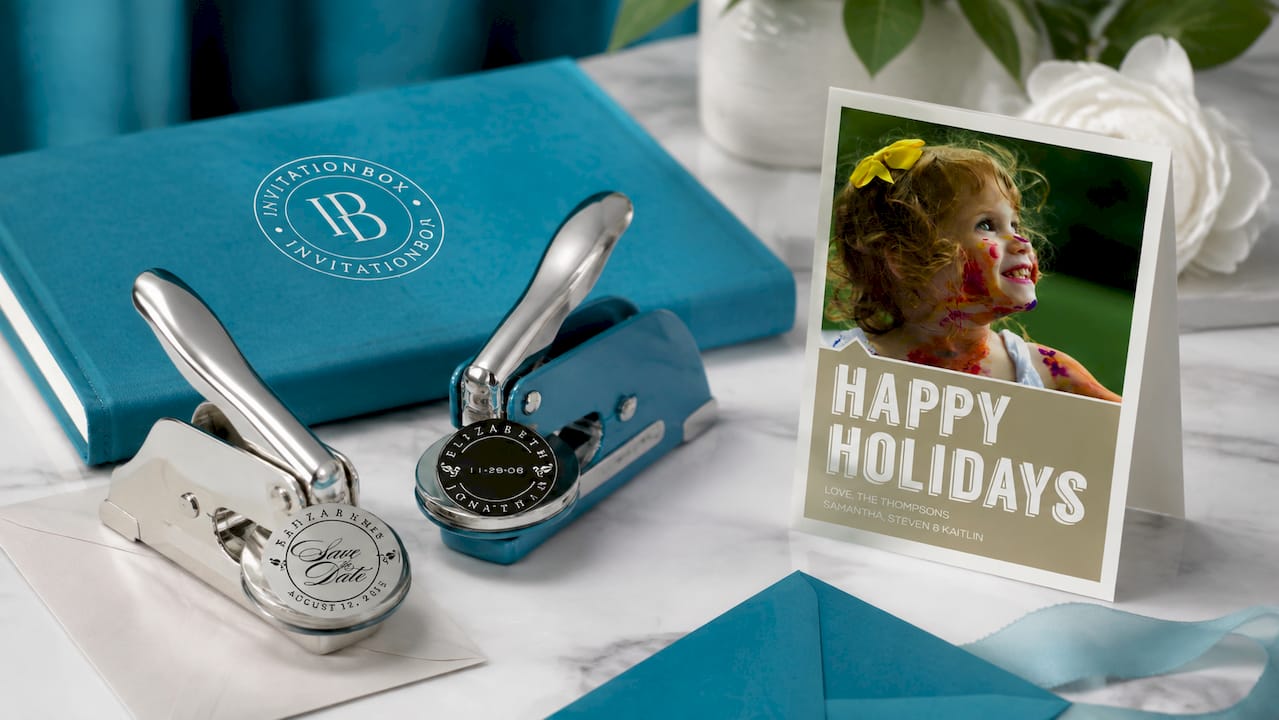
Pair either card with a custom return-address stamp, and addressing your whole list gets dramatically faster. The Corner Scrolls Square Stamper or Embosser, Classic Scroll Square Stamper or Embosser, Modern Scroll Stamper or Embosser, and Horseshoe Stamper or Embosser each give your envelopes a coordinated, hand-finished look without hand-writing a single return address. If you want something with more personality, the Jolly Rogerette and Extra Ornamental Stamper or Embosser options bring a little more flourish to the same job.
Order stampers alongside your save-the-dates, ideally 4 to 6 weeks before your target mail date, so proofing and production happen in parallel instead of back to back. Browse the full save-the-date and stamper collection to get your order in before your window closes.
Frequently Asked Questions
What is the ideal save-the-date timeline for most weddings? Six to eight months before the wedding for local events, and eight to twelve months for destination or holiday weekend weddings, with up to eighteen months for complex international travel.
When is it too late to send a save-the-date? Under four months before the wedding is generally considered too late. At that point, skip save-the-dates and mail invitations directly, six to eight weeks before the date.
How many invitations should I order beyond my guest count? Order at least 5 to 10 extras beyond your final headcount to cover misspellings, missed addresses, or last-minute additions to the list.
Should save-the-dates go out before or after the guest list is finalized? After. Send them only to guests you’re certain will receive a formal invitation, since removing someone later is an etiquette problem worth avoiding entirely.
Is it acceptable to send digital save-the-dates instead of paper? Yes, particularly for casual weddings or tight timelines, though paper remains the more traditional choice for formal or multi-generational guest lists.
Sources
- When to Send Save-the-Dates vs. Wedding Invitations: Complete Timeline | Plan A Wedding
- Save-the-Date Etiquette and Timeline Guide | Plan A Wedding
- Save-the-Date Etiquette: When to Send Them and More | The Knot
- Holiday greeting cards advice | Emily Post
Recommended
- Save the Dates vs Invitations: Your Complete Wedding Guide – InvitationBox.com
- From Save-the-Dates to Engagement Party Invitations: Coordinating Your – InvitationBox.com
- Wedding Stamper or Embosser by Noteworthy Collections at InvitationBox.com
- When is the Best Time to Send Out Party Invitations? – InvitationBox.com