

Measure First, Buy Right: Stamp Sizes, USPS Ranges, Product Matches
Most custom rubber stamps fall into a few predictable sizes: return-address stamps run about 1 by 2.5 inches for three lines of text, while single-line labels work well at 1.5 by 0.5 inches. Postage stamps, which follow a completely separate standard, range from roughly 0.87 by 0.98 inches up to 1.26 by 1.59 inches. The one thing that keeps you from ordering the wrong size? Measure your inked artwork edge-to-edge, then leave a little breathing room around it before you check that measurement against the product’s stated impression area.
TL;DR:
- Custom stamp sizes should be measured edge-to-edge with added margins of about 0.08 to 0.12 inches to ensure full legibility and avoid smearing.
- Standard stamp sizes cluster around specific dimensions, such as 1.5 inches by 0.5 inches for small labels and 1 inch by 2.5 inches for return addresses, fitting common design needs.
- Postage stamps vary from 0.87 inches to 1.59 inches, but custom stamps are not bound by these dimensions unless mimicking a classic postage look or for decorative purposes.
- The choice of stamp type, such as self-inking or embossers, limits impression size and must be matched carefully to your content’s measured dimensions to prevent crowding or loss of detail.
- Size should always be dictated by your actual content—measure your text or design first, then select a housing that provides adequate margin, rather than choosing based solely on aesthetic preferences or product photos.
Table of Contents
- Standard Stamp Sizes Chart and What Each One Fits
- How Big Is a Postage Stamp, and How Does It Differ From Custom Stamps?
- How Do You Measure a Stamp for the Right Size?
- Choosing the Right Layout for Your Stamp Size
- Does Stamp Type Change the Available Size?
- Who’s Behind This Sizing Guidance?
- What Most Sizing Advice Gets Backwards
- Ready to Order? Match Your Size to the Right Product
- Sources
Standard Stamp Sizes Chart and What Each One Fits
Picking a stamp size feels a lot like picking a picture frame. Too small, and your message gets cramped and unreadable. Too big, and it overwhelms the envelope or card it’s stamped onto. The good news is that custom stamps cluster around a handful of tried-and-true sizes, and each one has earned its place for a reason.
Here’s how the standard sizing breaks down, drawing on common supplier measurements from Homenish’s stamp size guide and cross-referenced against Stamp-Connection’s brand charts:
| Size category | Typical dimensions | Best for |
|---|---|---|
| Small rectangle | about 1.5 inches by 0.5 inches | One line: a name, a short label, “Handmade With Love” |
| Medium rectangle | around 2 inches by 0.5 inches | Two lines: name plus a short tagline or title |
| Standard return address | approximately 1 inch by 2.5 inches | Three lines: name, street, city/state/zip |
| Large rectangle | about 2 inches by 0.5 inches | Three to four lines, or two lines plus a small logo |
| Extra-large rectangle | up to roughly 2 inches by 0.5 inches | Business stamps with logo, name, and contact details |
| Round (diameter) | 1 to 2 inches | Monograms, seals, embosser designs |
| Square | 1 to 1.6 inches per side | Logos, monograms, symmetrical designs |
A few reminders make the difference between a stamp that looks sharp and one that looks squeezed:
- Leave at least a sliver of clear space around your text. Ink that touches the edge of the impression area tends to smear or blur.
- Round and square stamps read better with shorter words or initials. Long names wrap awkwardly in a circle.
- If you’re torn between two sizes, size up. A little extra white space always reads cleaner than crowded text.
How Big Is a Postage Stamp, and How Does It Differ From Custom Stamps?
Postage stamps and custom rubber stamps get confused constantly, but they’re built to completely different rules. According to USPS specifications, postage stamps typically range from approximately 0.87 inches by 0.98 inches on the small end up to about 1.25 inches by 1.59 inches for larger designs. Rectangular shapes dominate, though square and round formats show up occasionally for commemorative or special-issue stamps.
That range exists for printing and perforation reasons that have nothing to do with your return-address stamp or your embosser. A few things worth keeping straight:
- Commemorative and limited-edition postage stamps often stretch outside the typical range, so don’t treat them as a sizing benchmark.
- Custom rubber stamps aren’t bound by postage dimensions at all. You can order a corner-scroll design at 2 inches wide if that suits your envelope.
- The only time postage-style dimensions matter for a custom order is if you’re deliberately going for that classic “stamp” look on a decorative piece, like a vintage-style embosser.
How Do You Measure a Stamp for the Right Size?
Getting the size right comes down to measuring the actual inked area, not guessing from a screen or a rough sketch. Here’s the process that keeps you from ordering something too tight or too loose:
- Gather your tools. A steel ruler or digital calipers gives you the most accurate reading. If you’re measuring digital artwork instead of a physical stamp, work from a printed template at 100% scale rather than trusting your screen’s zoom level.
- Measure the inked impression edge-to-edge. Record both width and height in inches, rounded to two decimal places. This mirrors the approach Mystic Stamp recommends for matching mount sizes: measure the printed area first, then match it to the product.
- Add margin for legibility. Build in roughly 0.08 to 0.12 inches of clear space on each side. This buffer keeps text from crowding the edge of the impression area, especially on smaller stamps where every fraction of an inch counts.
- Cross-check against the product’s impression area. Every stamp housing lists a maximum impression size. If your measured artwork exceeds it, either shrink the design or size up to the next housing.
Pro Tip: If you’re ordering a self-inking stamp instead of a wood-handle mount, add a touch more margin than you think you need. The mechanical housing around the impression area can make text near the edges harder to align consistently with each stamp.
Choosing the Right Layout for Your Stamp Size
The size you pick only works if the layout fits it. Text that’s too small disappears into the ink; text that’s too large runs off the edge. A few working rules keep the balance right:
- For small labels, keep font sizes around 6 to 8 points. Anything smaller tends to blur once it’s stamped.
- Address lines read best at 10 to 12 points, especially on a 1" by 2.5" return-address stamp with three lines of text.
- Aim for roughly 20 to 25 characters per line on standard address stamps. Longer lines force smaller type or awkward wrapping.
- Give each line of text a little vertical breathing room. Lines packed too close together blur together once inked.
- On a standard #10 envelope, position your return-address stamp about 0.5 inches from the top and left edges for a clean, balanced look. Our envelope sizes guide breaks down margins for other common formats if you’re stamping something other than a #10.
If you’re mapping a message to a size, three lines almost always points you toward the 1" by 2.5" standard, while a single name or short phrase fits comfortably in a 1.5" by 0.5" stamp. Our guide to return-address placement covers alignment specifics if you want the finished look to match traditional stationery etiquette.
Does Stamp Type Change the Available Size?
Yes, and this is where a lot of first-time buyers get tripped up. The mechanism behind your stamp limits how much impression area you actually have to work with.
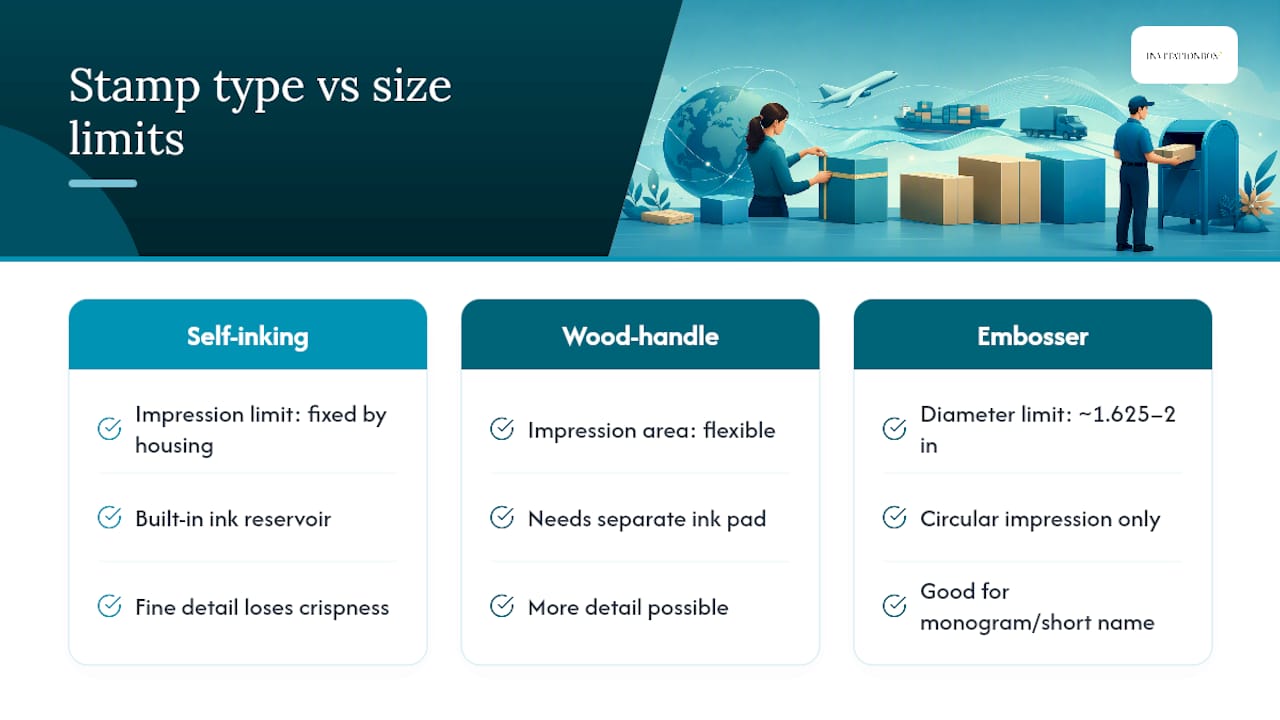
Self-inking stamps and pre-inked stamps both build the ink reservoir directly into the housing, which caps the impression area at whatever size that particular model supports. Our self-inking stamper guide walks through capacity differences across common housing sizes. Detailed artwork, tiny serif fonts, or fine linework can lose crispness on smaller self-inking models, so simplify the design if you’re working in a compact size.
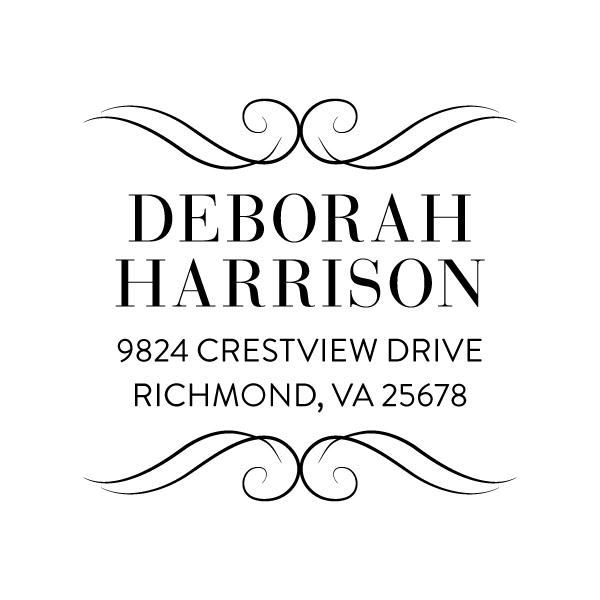
Wood-handle and mounted rubber stamps give you more flexibility because the rubber die isn’t locked into a fixed housing. The tradeoff is that you’ll need a separate ink pad sized to match, so double-check pad dimensions before you order.
Embossers work differently altogether. They’re limited by diameter rather than a rectangular impression area, and most decorative embossers max out around 1.625 to 2 inches across. That’s plenty of room for a monogram or a short name, but not for a multi-line address.
Who’s Behind This Sizing Guidance?
This guide draws on more than 19 years of hands-on stationery and stamp production experience, including use of a proprietary design system for self-inking products. For more applied examples, check the self-inking stamper product guide or the envelope sizing reference for placement details.
What Most Sizing Advice Gets Backwards
Most stamp-buying advice treats size as a cosmetic choice, something you pick based on what looks nice on a product photo. That’s backwards. Size is a mechanical constraint first and a design choice second. The impression area on a self-inking housing, the character count on a return-address line, the diameter cap on an embosser: these aren’t preferences, they’re limits you’re designing inside of.
The conventional wisdom oversimplifies by pointing you toward “small, medium, or large” without ever asking what you’re actually printing. A logo with fine detail needs more real estate than a name in a clean sans-serif font, even if both are technically “three lines.” That’s the nuance most quick-reference charts skip entirely.
If you take one thing from this guide, measure your actual content first, not the stamp. Write out your address or design at the font size you actually want, measure that block of text edge-to-edge, then shop for a housing that fits it with margin to spare. Sizing backwards from the product listing is how people end up disappointed with a stamp that looked fine in a photo and cramped in hand.
— Jon
Ready to Order? Match Your Size to the Right Product
Once you know your dimensions, matching them to an actual product is the easy part. Some decorative stamper and embosser lines are built around the size families covered above, helping buyers avoid guesswork on impression areas.
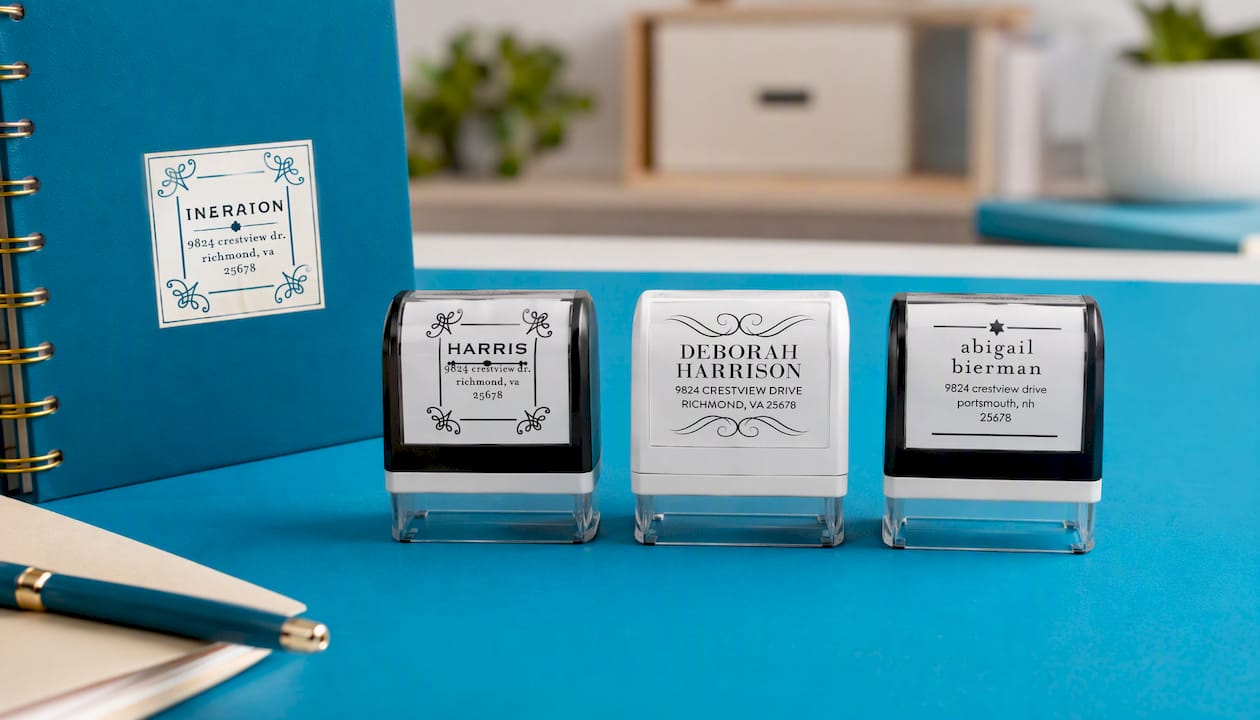
For a classic three-line return address, the Classic Scroll Square Stamper or Embosser and Corner Scrolls Square Stamper or Embosser both work well within standard address dimensions. If you want something with more visual flair for a logo-plus-name layout, the Modern Scroll Stamper or Embosser and Extra Ornamental Stamper or Embosser give you more surface area to work with. For a playful or seasonal option, the Horseshoe Stamper or Embosser and Jolly Rogerette Stamper or Embosser suit themed stationery and gift packaging nicely.
Before you check out, measure your artwork edge-to-edge and compare it against the listed impression area for whichever product you choose. If you’re unsure which size will hold your text cleanly, reach out for custom sizing help, or pair your stamp with matching stationery like the Bright Swirls Personalized Notepad to see how the design looks in context before you commit.
Sources
- What sizes, shapes, and formats do stamps come in? — USPS
- How to measure stamps for mounts — Mystic Stamp
- Guide to standard stamp sizes — Homenish